Learn to Fly

How to become an airline pilot: Part 2

Find out about the all-important funding, what the training consists of and how to get an airline job…

How much will it cost and how do I fund it?

Professional pilot training is a major financial commitment. Training to the point of licence issue typically costs between £60,000 and £130,000, excluding living expenses. Scholarships exist for certain elements of training, particularly early stages such as groundschool or the Private Pilot Licence.

In recent years, some airlines have reintroduced sponsored training programmes. Airlines such as Aer Lingus, British Airways and TUI have offered cadet schemes that cover part or all of the training costs. However, places are limited and competition is intense.

Many students therefore fund their training privately. Modular training can make this easier because it allows students to work between training phases, whereas integrated courses generally require full-time commitment.

The overall cost of becoming an airline pilot may also include the type rating – a course that trains a pilot to operate a specific aircraft type after securing an airline job. Type rating costs typically range from around £15,000 to £40,000, although many airlines now cover these costs themselves or recover them gradually through salary deductions or training bonds.

Because training is such a large investment, protecting that investment is vital. Consider the following:

  • Research your chosen Approved

Training Organisation (ATO). How long has it been operating? Does it have a stable financial history? What links does it have with airlines?

  • Avoid paying the full course fee

upfront, even if discounts are offered. Paying module by module provides protection should a training organisation cease trading.

  • Ask whether the school offers payment

protection programmes that refund a portion of your fees if you are unable to complete the training.

Pilot selection

Selection is an ongoing part of a pilot’s career, both before and after training. Airlines assess technical ability, personality, teamwork and motivation.

Initial selection often includes aptitude tests that measure hand-eye coordination, spatial awareness and reaction speed. Maths tests are also common, assessing mental arithmetic and problem-solving ability.

Personality assessments are increasingly used to evaluate how candidates might perform within a professional flight crew environment.

Preparation is possible to some extent. Familiarising yourself with the format of aptitude tests and practising similar exercises can help.

Later stages of selection typically include interviews and group exercises designed to evaluate leadership, teamwork and communication skills. Airlines will also examine your motivation for the role and your understanding of the industry.

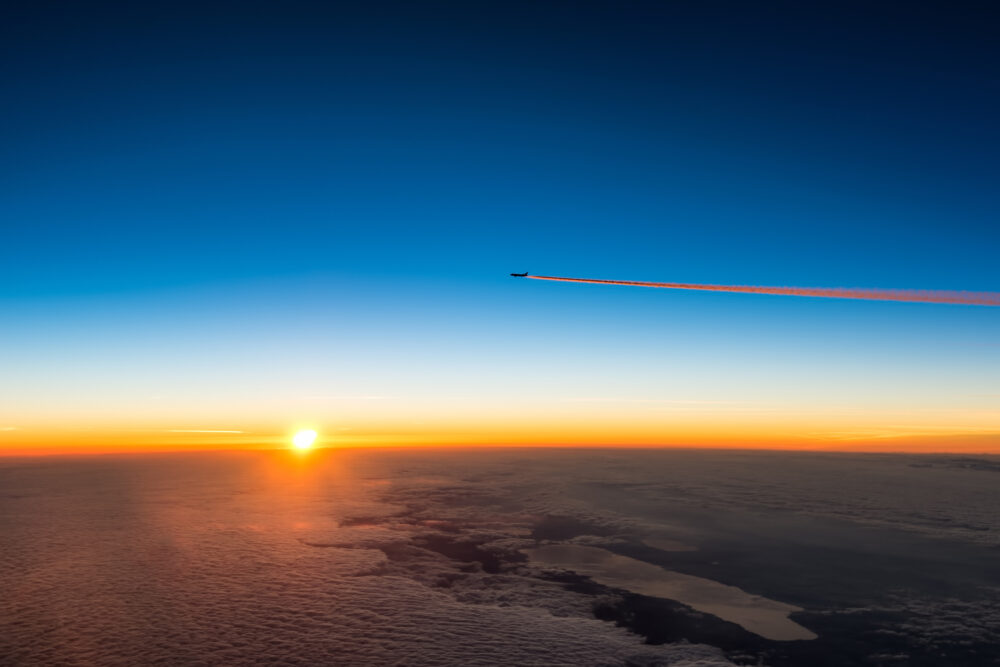
A Boeing 787 with a perfect lit contrail, somwhere over France.

What does the training course consist of?

Pilot training is divided into several stages.

ATPL ground exams

Students must pass 13 theoretical knowledge exams covering subjects such as navigation, flight planning, aviation law and human performance. Full-time groundschool typically lasts six to nine months and involves an intensive study schedule.

Flight training

Practical flying takes place in single- and multi-engine aircraft. Early stages depend heavily on good weather, which is why some training organisations conduct parts of the course overseas.

Night rating

This qualification includes both dual and solo flying at night.

Commercial Pilot Licence (CPL)

The CPL allows a pilot to fly professionally. Integrated students can reach this stage with around 150 hours of total flight time, while modular students usually require at least 200 hours.

Multi-engine rating

Training to operate aircraft with more than one engine, including handling engine failures.

Instrument rating

This teaches pilots to fly solely by reference to the aircraft’s instruments and is the foundation of airline flying in poor weather and cloud.

Multi-Crew Cooperation (MCC)

This course teaches pilots how to operate as part of a multi-pilot crew. Many students now complete the more advanced Airline Pilot Standard MCC (APS MCC), which places greater emphasis on airline-style simulator training.

How do I get an airline job?

If you are not already sponsored by an airline, you will begin applying for positions once you complete training.

Many flight schools provide career support, helping graduates prepare CVs and practise for simulator assessments and interviews. Some schools also maintain relationships with airlines that recruit directly from their graduate pools.

Graduates must remain proactive. If there is a long gap between finishing training and finding a job, refresher training may be required to maintain proficiency. Once hired by an airline, pilots complete a type rating for the aircraft they will fly. This is followed by line training, where they operate commercial flights under the supervision of a training captain.

After successfully completing line training, a pilot becomes a fully qualified First Officer. From there, career progression typically involves gaining experience, eventually upgrading to captain and moving to the left-hand seat.

Aviation careers can also develop into roles in training, management or technical specialisation. Short-haul and long-haul operations offer different lifestyles and career progression patterns.

Next steps

Make the most of your time at Pilot Careers Live. Events are held throughout the year in the UK and across Europe.

Here you can meet leading Approved Training Organisations, airlines, universities offering aviation degrees and industry specialists who can answer questions about professional pilot training. Presentations from airlines and training providers run throughout the event, offering further insights into the profession.

Typical airline pilot training timeline

  • ATPL theory: 6-9 months
  • Flight training: 8-14 months
  • CPL/ME /IR tests: 2-3 months 
  • MCC or APS MCC: 2-3 weeks
  • Total training time (integrated): 18-24 months
  • Modular training may take longer depending on how quickly students complete each stage.

Click here to go back to Part 1

What does it really cost?

Typical costs for UK airline pilot training:

ATPL training:

£60,000 – £130,000

Living expenses during training:

£10,000 – £25,000

Type rating:

£15,000 – £40,000

(sometimes funded by airlines)

Estimated total investment:

£80,000 – £160,000

Some airlines now sponsor cadet programmes or recover training costs gradually through salary deductions.

Share

Leave a Reply

Share
Topics
Enjoy 1 Free article OR Join today to enjoy unlimited access to all content
Join today

We use cookies to give you the best online experience. Please let us know if you agree to all of these cookies.