More than a quarter of near-misses involve aircraft joining the circuit above an airfield, according to the Airprox Board’s monthly update.
Six out of 22 cases looked in January 2026 were in the circuit. Two of the six concerned aircraft joining from a long final, said the UKAB Director in their Airprox of the Month report.
“The one I have chosen this month is a particularly close encounter,” writes the Director.
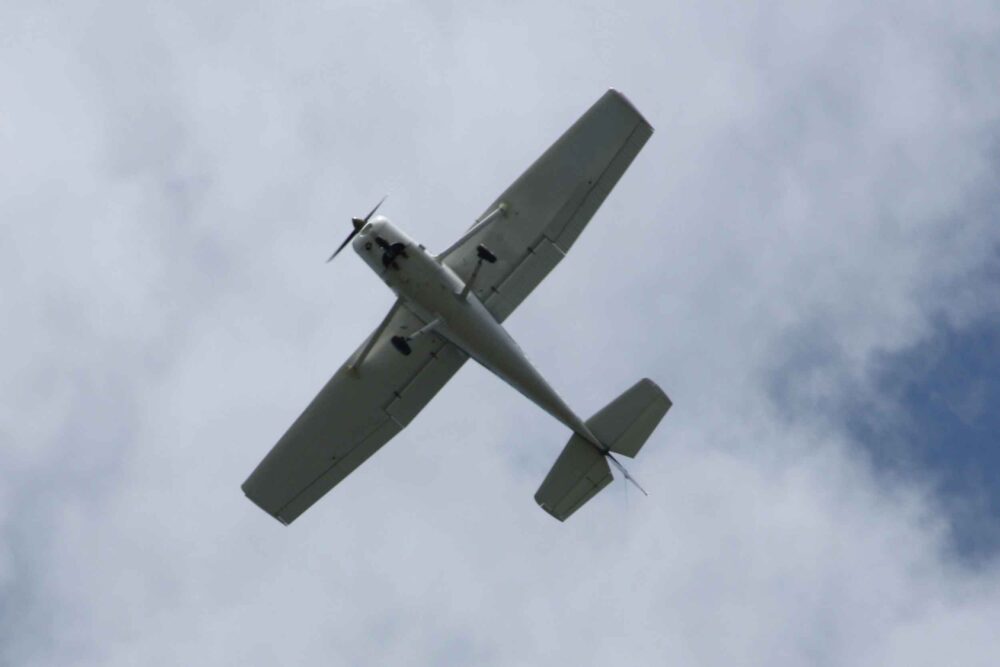
“It happened on approach to RW24 at Leeds East airfield and involved two Cessna 152s – one established in the circuit and one joining from a long final. Both pilots were in receipt of an Air/Ground Communication Service from Fenton Radio, but only the Cessna arriving on a long final was equipped with any form of additional electronic conspicuity equipment (which didn’t detect the circuit traffic).
“The pilot of the joining Cessna was aware there was circuit traffic, having monitored the frequency for a while, and also knew that overhead joins were not permitted due to an aerobatics competition. However, the pilot of the Cessna already in the circuit reported they did not hear any calls from the other pilot until their ‘Final’ call.
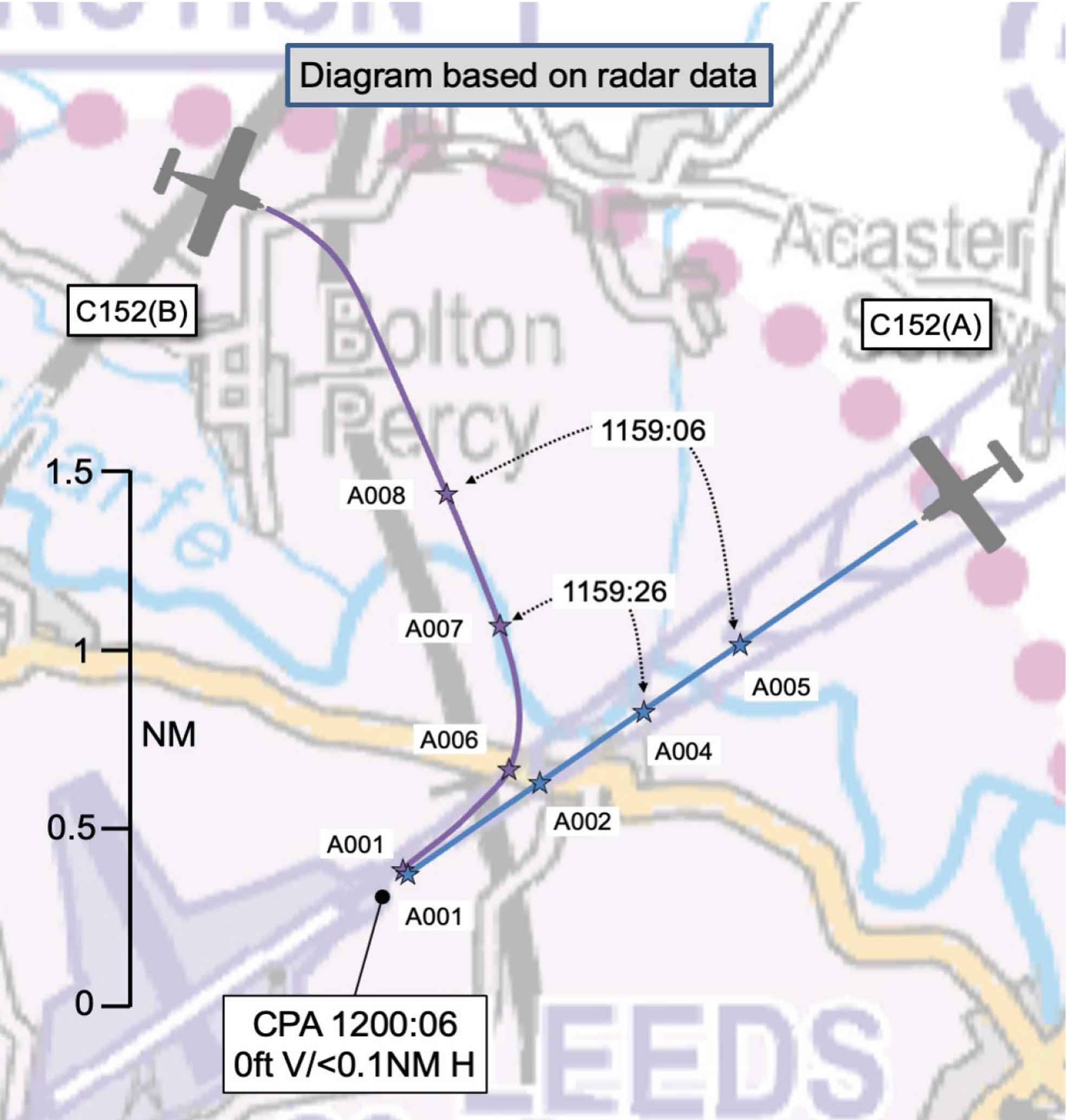
C152 joining the circuit on Long Final has a near-miss with another turning Base to Final. Image: UKAB
“Ultimately, the Cessna in the circuit passed in front of the aircraft on the straight-in approach and, shortly afterwards, the pilot of the aircraft on the straight-in approach caught sight of the other aircraft and initiated a go-around.
“Separation between the two at their closest point of approach (CPA) was negligible and entirely fortuitous – neither pilot had seen the other aircraft prior to the CPA.”
The Director goes on to discuss what radio calls should be made in the circuit, and points readers to CAA’s Safety Sense Leaflet No 22 (Radiotelephony).
‘Downwind’ and ‘Final’ are the minimum, and the Safety Sense leaflet suggests that ‘Late Downwind’ and ‘Base’ could be added if necessary.
“It would probably have helped the pilot of the joining aircraft if the pilot of the circuit traffic had called ‘Base’, but let’s remember that the pilot of the Cessna in the circuit had no idea that there was an aircraft on final approach because they had not heard the ‘Long Final’ call,” continues the Director.
“It’s also important to be accurate with these position calls. The ‘Downwind’ call should be made abeam the upwind threshold; if you can’t get that call in due to RT loading or for any other reason, the ‘Late Downwind’ call should be made any time after passing the approach end of the runway.
“Why is this important? Because a call of ‘Late Downwind’ will indicate much closer proximity to Base Leg and Final than a ‘Downwind’ call, thus providing other pilots with much greater awareness of the actual traffic positions.”
Airprox numbers down
Last year saw a significant reduction in total reports and aircraft-to-aircraft events from 2024, representing an overall reduction of around 15%.
“There are many factors that influence reporting, but I am encouraged by this reduction, and long may it continue!” continues the Director.
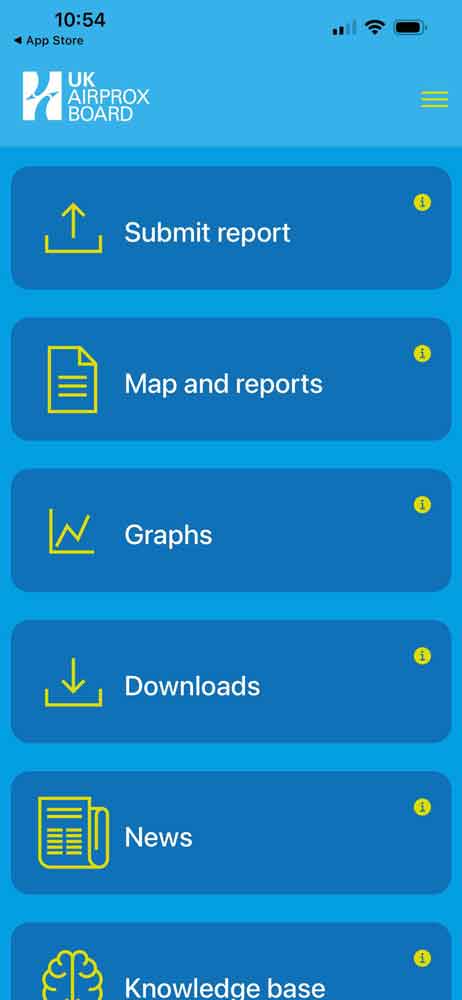
The UKAB also has a new app, downloadable free from either Google Play or Apple App Store.
UK Airprox Board