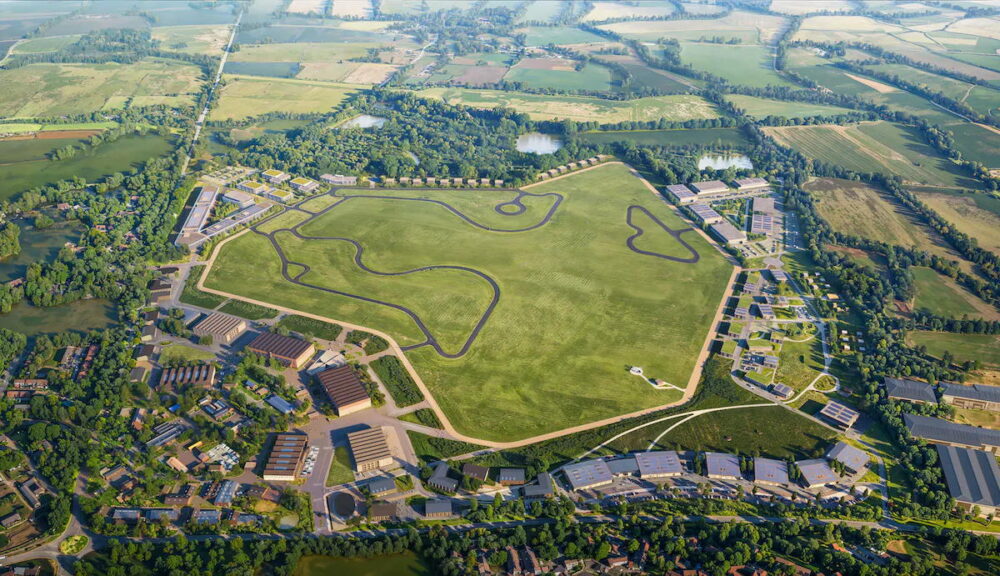
Bicester Motion’s latest plans prove one thing: this is no longer about preserving a historic airfield.
Let me start by saying there is no doubting what Bicester Motion has achieved.
Since taking over the former RAF Bicester site in 2013, the company has transformed a derelict military estate into one of the UK’s most successful automotive and mobility clusters. More than £100 million has been invested. Over 50 companies now call the site home. Hundreds of jobs have been created. Apprenticeships are thriving. Major names including Audi’s F1 operation, Polestar, YASA and Motorsport UK have arrived. Economically, the figures are undeniably impressive.
But with the unveiling of its new ten-year masterplan, something else has become unmistakably clear: the idea that RAF Bicester is being “preserved” as a historic airfield has long since disappeared.
The latest proposals include another million square feet of office and technical space, around 200 apartments, affordable housing, hotel lodges, a clubhouse and major commercial expansion across the 444-acre estate. It is a bold and ambitious vision. It will likely bring more investment, more jobs and more economic activity to Oxfordshire.
What it will not bring is the preservation of a living historic airfield in any meaningful sense.
For years, supporters of the development argued that commercialisation was necessary to secure the future of one of Britain’s best-preserved RAF stations. In the early years, that argument carried weight. Restored hangars, careful regeneration and sympathetic architecture appeared to strike a balance between heritage and commercial viability.
But balance eventually tips.
Today, the language surrounding the site is revealing. “Future mobility estate.” “Dynamic and sustainable community.” “Connected living.” “Apartments.” “Clubhouse.” “Hospitality.” These are not the terms of airfield preservation. They are the language of property development and corporate expansion.
And perhaps that is entirely fair. Businesses evolve. Economic reality matters. The UK desperately needs investment, skilled employment and technology hubs. By those measures, Bicester Motion is an extraordinary success story.
But honesty matters too.
Because this is no longer principally an aviation heritage project with commercial support around the edges. It is now a large-scale mixed-use commercial development which happens to occupy the footprint of a former RAF station.
The distinction matters because RAF Bicester was never just another brownfield site. It was one of the most intact surviving RAF bomber stations in Britain — a place whose historic significance came not simply from its buildings, but from its atmosphere, openness and operational character as an airfield.
That character is steadily disappearing beneath offices, hospitality, residential development and corporate campuses.
None of this means Bicester Motion should be condemned. Far from it. In many ways, the company has done more for the site than decades of government ownership ever achieved. Historic buildings that may have collapsed into ruin have instead found new life. The estate is economically vibrant. The site has energy and purpose again.
But the public consultation unveiled this week feels like the moment the final pretence falls away.
Bicester Motion is no longer preserving a historic RAF airfield.
It is building a modern business and residential district on top of one.