Thousands of UK private pilots could face additional cardiovascular screening under newly updated CAA medical guidance aimed at improving the assessment of cardiac risk among pilots and air traffic controllers.
The CAA has published revised cardiovascular assessment guidance, including a new decision-making flow chart designed to help aeromedical examiners apply cardiac risk standards more consistently across different medical certificate classes. The regulator says the changes are intended to support “safe and informed certification decisions based on individual risk”.
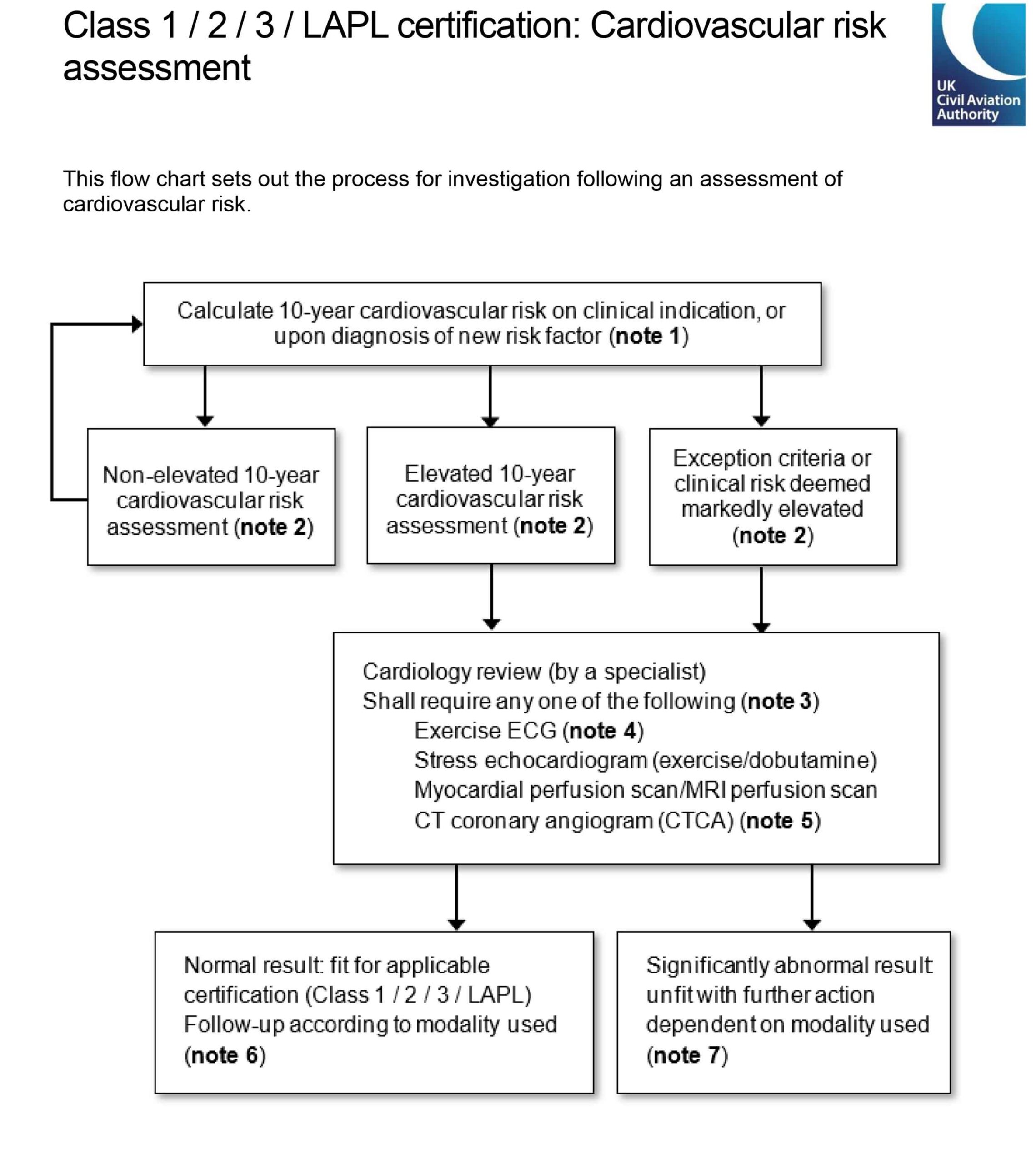
CAA cardiac risk guidance includes this flow chart. Image: CAA
While the guidance applies across aviation medical certification, its greatest impact may be felt among older private pilots.
Analysis of current CAA licence-holder data suggests that several thousand pilots are now in age groups where cardiovascular risk rises significantly. Internal analysis accompanying the guidance indicates that between 9,000 and 10,000 private aeroplane and helicopter licence holders are aged 60 or over. That places many closer to the CAA’s revised Class 2 cardiovascular risk assessment threshold of 15% risk of a cardiac event (heart attack or stroke) in the next ten years.
The age profile of UK licence holders supports that assessment. CAA statistics show more than 12,000 holders of UK Part-FCL PPL(A) licences with valid medical certificates, with substantial numbers concentrated in the 50-to-70 age range.
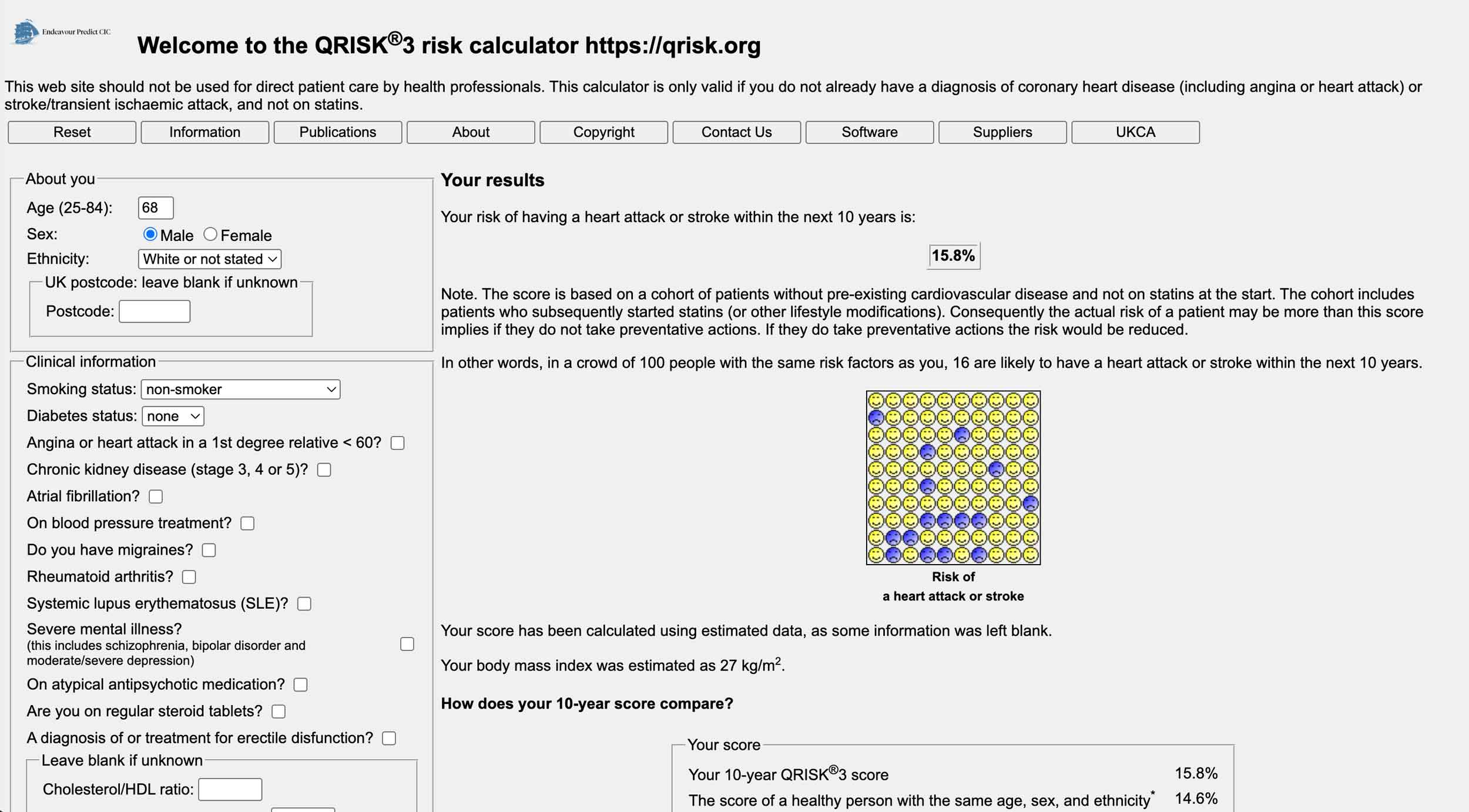
The online QRISK3 calculator shows the risk of a cardiac event in the next ten years. Here, a 68-year-old pilot with no complications has a risk of 15.8% – which exceeds the CAA’s limit of 15% for a Class 2 medical. Add in other factors such as blood pressure treatment, or slightly high cholesterol level and the risk is higher. Find the QRISK3 calculator here: https://qrisk.org/index.php
For pilots required to undergo additional investigations, the financial implications could be significant. Depending on the test selected by an aeromedical examiner, costs may range from around £500 for an exercise ECG to as much as £4,000 for MRI perfusion imaging. Other commonly used investigations include CT coronary angiography and stress echocardiography.
The CAA says aeromedical examiners have been briefed on the updated guidance and will assist pilots as the revised procedures are introduced. The regulator emphasises that the changes are intended to ensure cardiovascular risk is managed proportionately rather than imposing blanket restrictions.
For many private pilots, particularly those continuing to fly well into their sixties and seventies, the updated guidance serves as a reminder that maintaining cardiovascular health is becoming an increasingly important part of retaining a medical certificate.
FLYER has significant concerns about the potential consequences of these proposals and is compiling a series of questions for the CAA. We’ll publish those questions shortly and report back with the regulator’s responses in full.
To read the CAA Cardiovascular Guidance in full, click here.