Edinburgh Airport’s proposed transition to Performance Based Navigation and the subsequent ‘pipelining’ of airline traffic flows creates significant safety and operational hazards for General Aviation, according to a briefing paper produced by the Scottish Aero Club.
The briefing paper, which can be downloaded here, has been prepared for members of the Scottish Aero Club. It outlines concerns regarding proposed airspace changes at Edinburgh Airport and the impact on GA safety.
The Airspace Change Proposal says Edinburgh Airport intends to transition to Performance Based Navigation (PBN) which uses satellite and other technologies to define flight paths based on accuracy, integrity, and performance requirements.
The benefits are reduced flight times, lower fuel consumption, emissions, less noise pollution and increased airspace capacity.
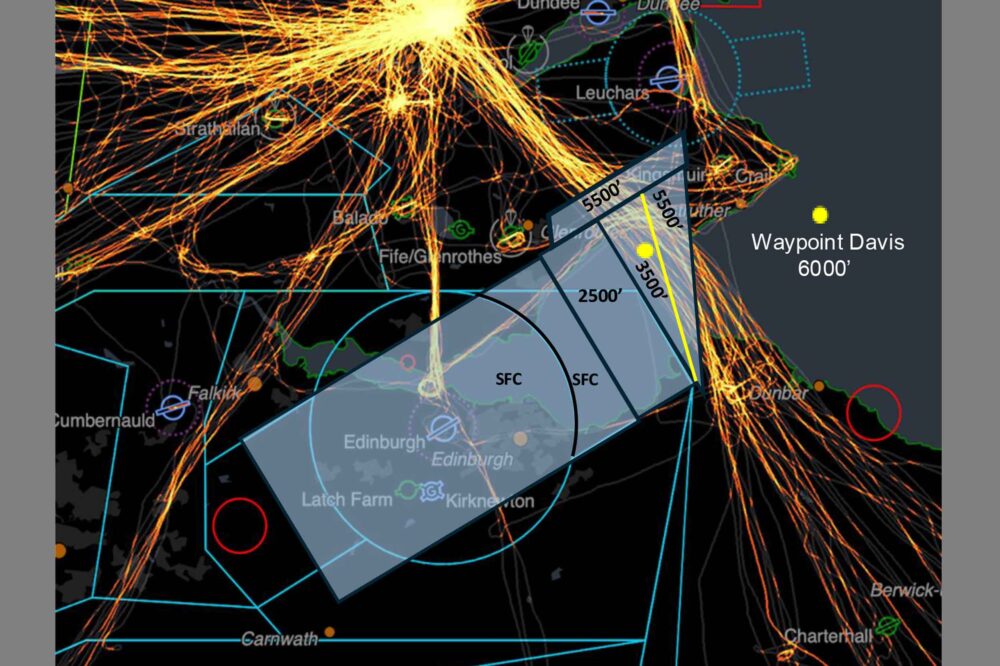
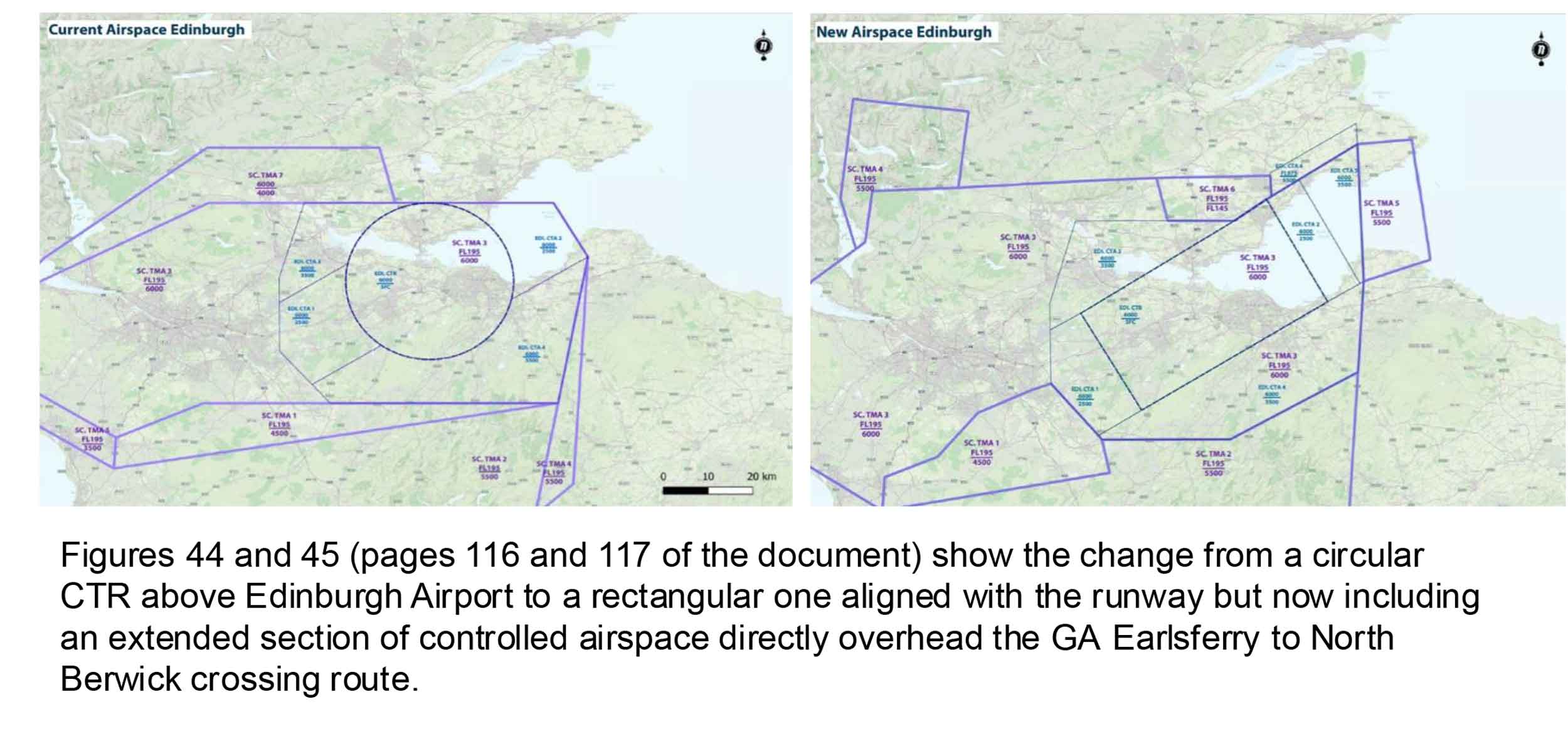
However, the Scottish Aero Club says the current circular controlled zone (CTR) would change to a rectangular one, extending controlled airspace over well-established light aircraft routes and have a ‘significantly negative impact’ on pilots traversing the Firth of Forth between Earlsferry and North Berwick.
Key concerns include:
- Reduced Glide Safety: The proposed base of the new controlled area is 3,500ft. This is deemed too low for most GA aircraft to glide safely to shore in the event of an engine failure.
- Increased Mid-Air Collision Risk: Pilots may be forced into narrower corridors or closer to other restricted airspace (Kingsmuir and Leuchars), increasing traffic density.
- Infringement Risk: Pilots seeking to maximise height while remaining in Class G airspace are more likely to accidentally enter the new restricted zones.
- ATC Workload: Increased requests from GA pilots seeking clearance to cross at safe, ‘glide secure’ altitudes will add stress to air traffic controllers.
Proposed solutions
The Club suggests reshaping the airspace by raising the base of the new controlled Area 8 from 3,500ft to a minimum of 5,500ft to match adjacent areas, and reshaping the parallelogram to reduce the size of the restricted area and maintain current ‘escape routes’ used during poor weather.
The deadline for responses to the Edinburgh Airport airspace consultation is 26 January 2026. Pilots are encouraged to upload their own SkyDemon heat maps to demonstrate the frequency of their current usage of these routes. Members of the club can discuss this further by emailing [email protected]
Scottish Airspace Modernisation Consultations