Special Feature

Halon fire extinguisher ban: what you need to do

fire extinguishers

General Aviation aircraft still carrying Halon fire extinguishers will soon need to replace them.

Under the Ozone-Depleting Substances Regulations 2015 and Ozone-Depleting Substances (Qualifications) Regulations 2009, it will be illegal to keep or use Halon extinguishers in the UK after 31 December 2025, except for a few very limited exemptions.

These regulations come from Defra and the Environment Agency – not the CAA — but they affect all aircraft operators, including GA. The rules aim to remove ozone-depleting chemicals such as Halon 1211 and 1301 from service completely.

Does every aircraft need to carry a fire extinguisher? Not necessarily.

Part-NCO (Non-Commercial Operations) does not require ELA1 aircraft — that’s most light singles under 1,200kg MTOM — to carry a fire extinguisher at all. The ANO Schedule 5 also exempts aircraft under 1,200kg MTOM from the requirement (so that covers Part 21 and non part 21 aircraft)

That means most light GA aircraft can legally remove the extinguisher altogether. Whether that is a good idea or not is a personal choice.

If you do carry one, you’ll need to replace Halon extinguishers with an approved halocarbon clean agent model.

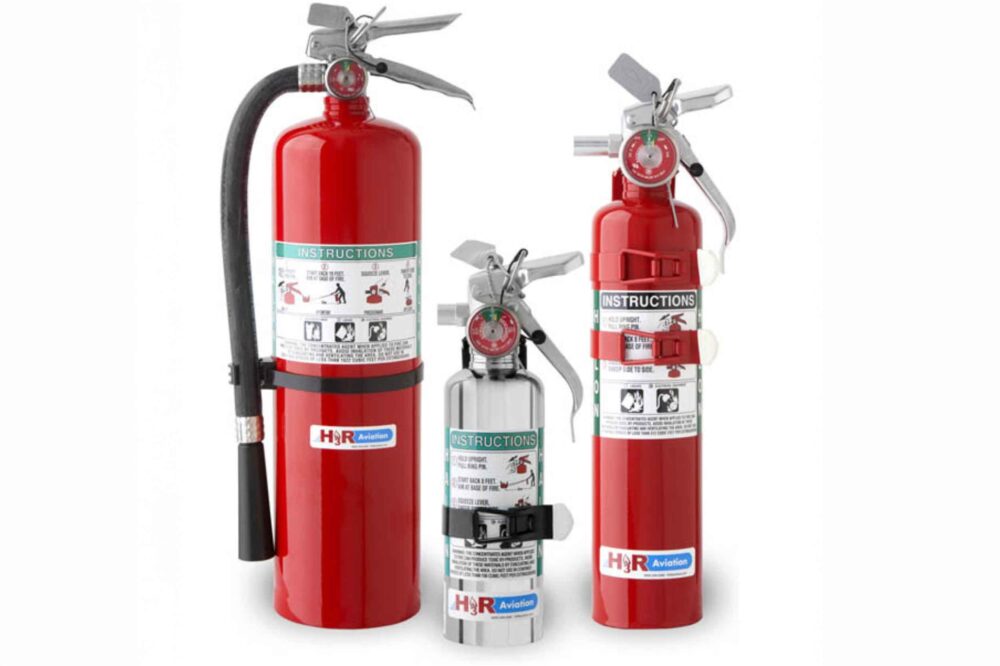
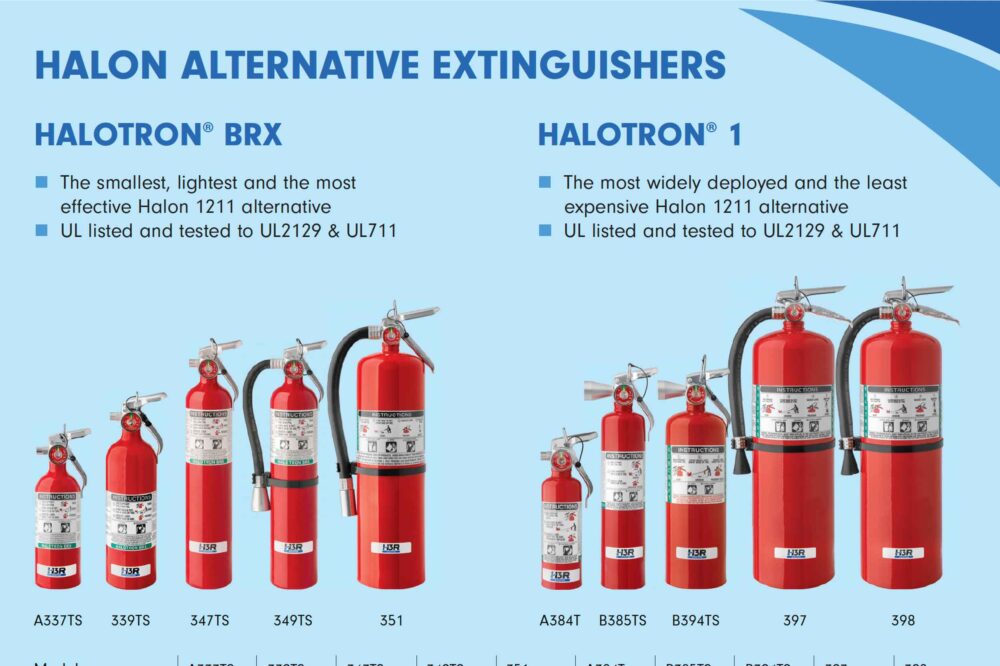
H3R Aviation produces a range of fire extinguishers including the Halotron Brx which is halon free.

The CAA points to several ways of doing this:

  • CS-STAN (Standard Change CS-SC034a) – allows direct replacement of a Halon extinguisher with an equivalent halocarbon clean agent type without needing specific CAA approval, although it will need to be signed off by a licensed engineer.
  • Certification Memorandum UK-CM-CS-013 – provides guidance for design organisations on how to install or approve replacements.
  • FAA AC 20-42D – referenced by the CAA – details acceptable extinguishing agents and installation standards.

What’s an acceptable replacement?

The FAA-approved halocarbon clean agents listed in AC 20-42D are:

  • HCFC Blend B
  • HFC-227ea (also known as FM-200)
  • HFC-236fa

These are non-ozone-depleting and approved as safe, effective, and compatible with aircraft materials.

Bottom line: The CAA isn’t leading this one — Defra and the Environment Agency are — but by the end of 2025, Halon extinguishers must be gone from GA aircraft unless you’re specifically exempt. Replacing them with an approved halocarbon clean agent type is relatively straightforward.

Govt Advice on Halon devices

Share

Leave a Reply

Share
Topics
You’ve reached your free article limit join today to enjoy unlimited access
Join today

We use cookies to give you the best online experience. Please let us know if you agree to all of these cookies.