Special feature

What makes a good pilot?

James Weiss puts his head above the parapet and gives his take on just what makes a good pilot

What makes a good pilot? Handling skills? Radio confidence? Unflappable personality? Checklist Charlie? Or just someone who oozes competence?

Pilot James Weiss, a member of the American Experimental Aircraft Association (EAA) decided to get a bit more objective. He analysed aircraft accident reports, listened to safety and incident briefings, then came up with what he thinks are the characteristics embodied in a good pilot.

James writes in a column for the EAA, “The keyword that I will focus on is diligence. A good pilot is diligent.”

Pre-flight

James starts right at the beginning with a pre-flight checklist with the mnemonic IMSAFE: Illness, Medication, Stress, Alcohol, Fatigue, Emotion.

  • Am I mentally prepared to fly today?
  • Did I have a fight with my spouse?
  • A fight with my boss?
  • Am I about to lose a court case?

“If the answer to any of these last four questions is YES, then maybe today is a good day to skip flying,” says James and he cites one particular accident.

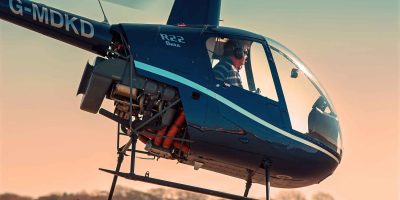
In 2006, a helicopter training company lost a student and an R22 helicopter when the student on a solo flight crashed. The student said on the radio, “I can’t take it,” as he nosed-over and flew the aircraft into the ground. The student had broken up with his girlfriend the day before the flight.

Pre-flight (more):

  • Are you having head-cold symptoms?
  • Are you taking OTC cold medications?
  • Are you having diarrhoea?
  • Have you taken Imodium?

If you answered ‘yes’ to any of these questions, you probably should not fly.

Pre-flight (contd):

  • When was the last time that you checked to see if there are any airworthiness directives (ADs) against your aircraft?

Hint: There is an AD for Ameri-King Corp emergency locator transmitters (ELTs). This is an old AD, but it is getting new attention. The AD covers Ameri-King models in the AK-450 series; as well as the AK-451 series. These ELTs MUST be checked for discrepancies and verifications.

  • Did you check the weather?

It is a really good idea to check the ATIS (Automatic Terminal Information Service) before you push the aeroplane out of the hangar, or some other recognised source of weather info.

  • Yes, but you only plan to fly the local pattern for an hour. What is the local Wx for the next four hours?
  • What is the Wx for your nearest alternate airport? Maybe you should take a peek, just in case.
  • What is the density altitude for your location, today, now? Yes, it was fine at 8am but now it is 2pm, and the temp is 25° higher.

Look, two 220lb men in a Cessna 152 (100hp) may not be a good fit for a warm afternoon’s flight, especially in high humidity. Exactly how long is that runway you plan to use?

  • OK, you checked the weather forecast at 8am. It is now near 11am. Have the winds changed direction since you last checked?
  • Did you tell anyone (wife, friend, neighbour) that you are flying?
  • Where do you plan to go? When do you expect to return?

Even if you plan a VFR ride in good Wx, you should tell someone what you are doing.

How sharp are your skills?

  • Are you instrument rated?
  • When was the last time that you performed an ILS approach?
  • When was the last time you landed after dark?

A pre-flight means a thorough check of the aircraft

Aircraft pre-flight:

  • What is the material condition of your aircraft? Let’s assume that you did actually walk around the aircraft and all the parts are still attached.
  • Did you drain the water from each fuel tank?
  • How much fuel is onboard?
  • Did you ‘stick’ the tanks to verify what the fuel gauge says?
  • Did that ELT check get signed off?
  • Did you check the oil? (Sometimes overlooked when flying rental aircraft.)
  • Do the tyres look right? It is a pain to check aircraft tyre pressure. But you don’t want to attempt a take-off with the aeroplane veering off the runway. If a tyre looks suspect, do take the time to check the pressues.
  • Did you check for any Notams in your area?

Strapped-In:

  • Did you verify that the fuel selector valve is set for the correct/desired tank?
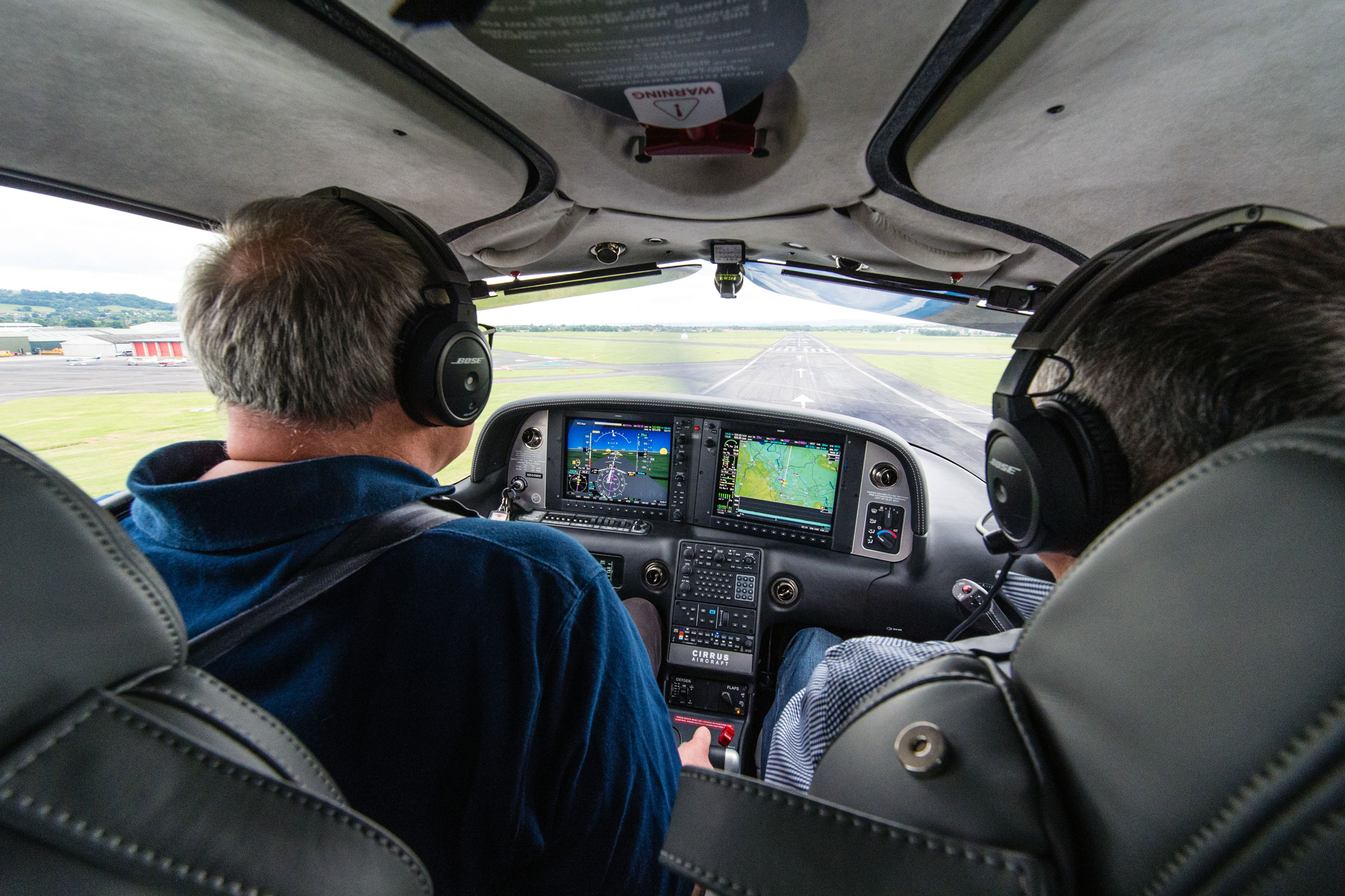
  • Are batteries in your noise cancelling headphones good?
  • Are your checklists readable and available? (Best kept in the pilot door pocket.)
  • Use cockpit resource management (CRM): Have your passenger read the checklist.
  • Have you briefed your passenger(s) on what to expect? Such as little or no talking during taxi and take-off. (A ‘sterile’ cockpit.)
  • Instruct right-seat occupant on helping with ‘clearing’ (look-out duty) the sky and runway. Diligent pilots make use of all available resources on every flight.
  • Are all doors and/or windows locked or secure?
Be prepared to fly to an alternative airfield rather than press on

Getting ‘ahead’ of the aircraft:

You need to decide before you advance the throttle: What if you lose power on take-off? What are you going to do?

  • Fact: The wings provide lift as the aircraft moves forward, straight and level.
  • Fact: If the pilot initiates a turn, the aircraft WILL lose altitude (but at 3,000ft, you hardly notice).
  • Fact: Most (pilot error) accidents, defined as loss-of control (LOC) happen at low altitude, usually near an airport.

Point: Often the best course of action in loss of power on take-off is to land straight ahead, even if that means hitting trees.

Attempting to turn back to the runway, especially at low altitude, nearly always results in a stall/spin/crash. Don’t be that guy.

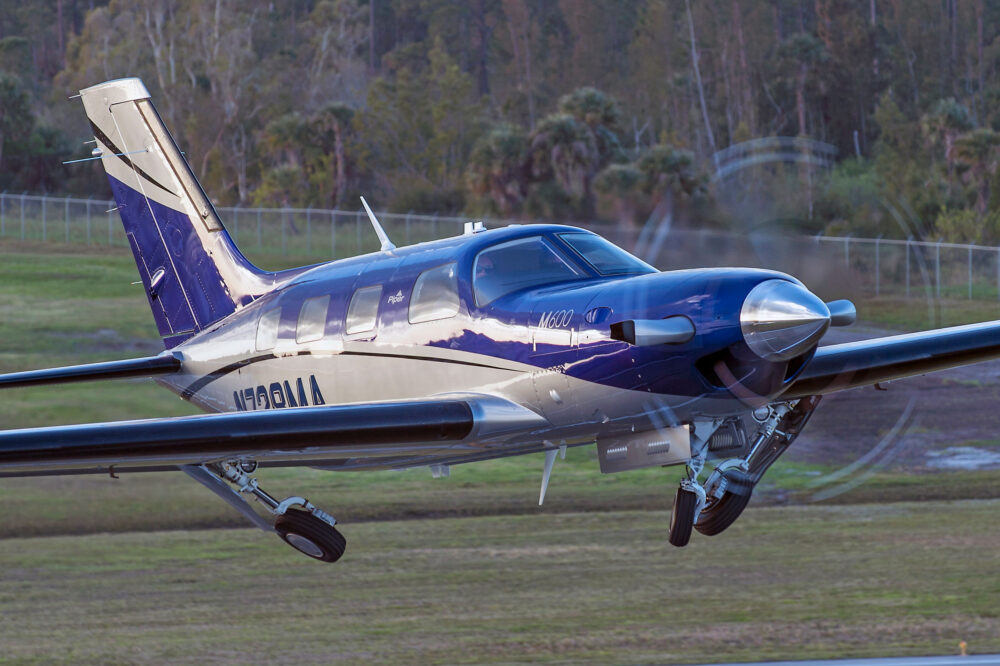
aircraft taking off, retracting wheels
Ensure you check how much fuel you have before taking off

In the air:

  • You planned for enough fuel to get to your destination, right?
  • No, a fuel reserve (30 minutes, 45 minutes at night) is not just for cross-country flights.
  • Are you staying aware of your fuel burn?
  • Let’s say you normally use a quarter tank of fuel going from, for example, Shoreham Airport to Bodmin. Are you keeping an eye on the fuel gauge?
  • Are you, for some odd reason, burning more fuel than expected?
  • Are you (mentally) prepared to land at an alternate airport?
  • Can you find the frequency for Solent Airport in an emergency?

Point: You are not flying back from a secret mission to Germany where you must cross the Channel to get the secret codes back to England. Too often, pilots fly past alternate airports to ‘get home’.

A diligent pilot needs to be aware when airborne – and only training will supress any moments of panic

More in the air:

A diligent pilot takes the effort to be constantly aware of his/her surroundings. Are you looking for a farm, or meadow, or straight road in case you need to make an emergency landing?

Only training can suppress the instinctive panic when bad things happen:

  • Like when a bird hits the windscreen. (Hello, miracle on the Hudson)
  • The engine blows a cylinder and loses power.
  • Clear-air turbulence (CLAT) often causes temporary LOC.
  • Or much worse: A gust-nado (severe down-draft, or ultra-turbulence) can form near a large thunderstorm.

Turning around or going to an alternate airport is best. Summer thunderstorms can be deadly.

A good pilot is always looking for, or is aware of, alternate airports and/or landing sites. It is just good practice. After a while, it becomes second nature.

There are many things to bear in mind when it comes to landing your aircraft

Getting ready to land: (Non-towered airport)

  1. Did you check the ATIS? (If applicable).
  2. Yes, you did check before take off but Wx changes.
  3. Do you have the air/ground frequency dialled in, or SafetyCom (135.480 mHz)?
  4. Are you listening to the radio?
  5. Do you have your passenger looking for other traffic (CRM again); traffic which may, or may not be, talking on the radio?
  6. Are you resetting the sterile cockpit?
  7. Are you making all the proper radio calls?
  8. Are you going to enter the pattern properly? Yes, you are the only aircraft up, but repetition is important.
  9. Are you mentally prepared to go-around?
  10. Aborting the landing is way better than trying to salvage a poor approach.
  11. Bad landings cause damage. Do you really want to spend more money on your aircraft?

Trying to look good for your buddies (or passengers) is not worth it.

Back on the ground:

  • Did you close your flight plan?
  • (If you were just VFR) Did you call your wife/neighbour/friend to say that you are safely on the ground?
  • Are you tying down?
  • Did you install all the chocks, vent, and pitot covers?
  • Did you install the gust lock(s)?
  • Did you take a peek to ensure that your aircraft is not dripping fuel or oil?

Summary

A diligent pilot takes inventory of his/her personal condition, his/her current skills, the material state of his/her aircraft, and the status of the weather BEFORE he/she engages the starter.

The diligent pilot uses every resource (CRM) at his/her disposal.

The diligent pilot has exceptional situational awareness, and is (mentally) prepared when bad stuff happens, or when other pilots violate airspace and radio procedures.

Are you a diligent pilot? Do have fun. But be safe.

CAA Safety Sense leaflets

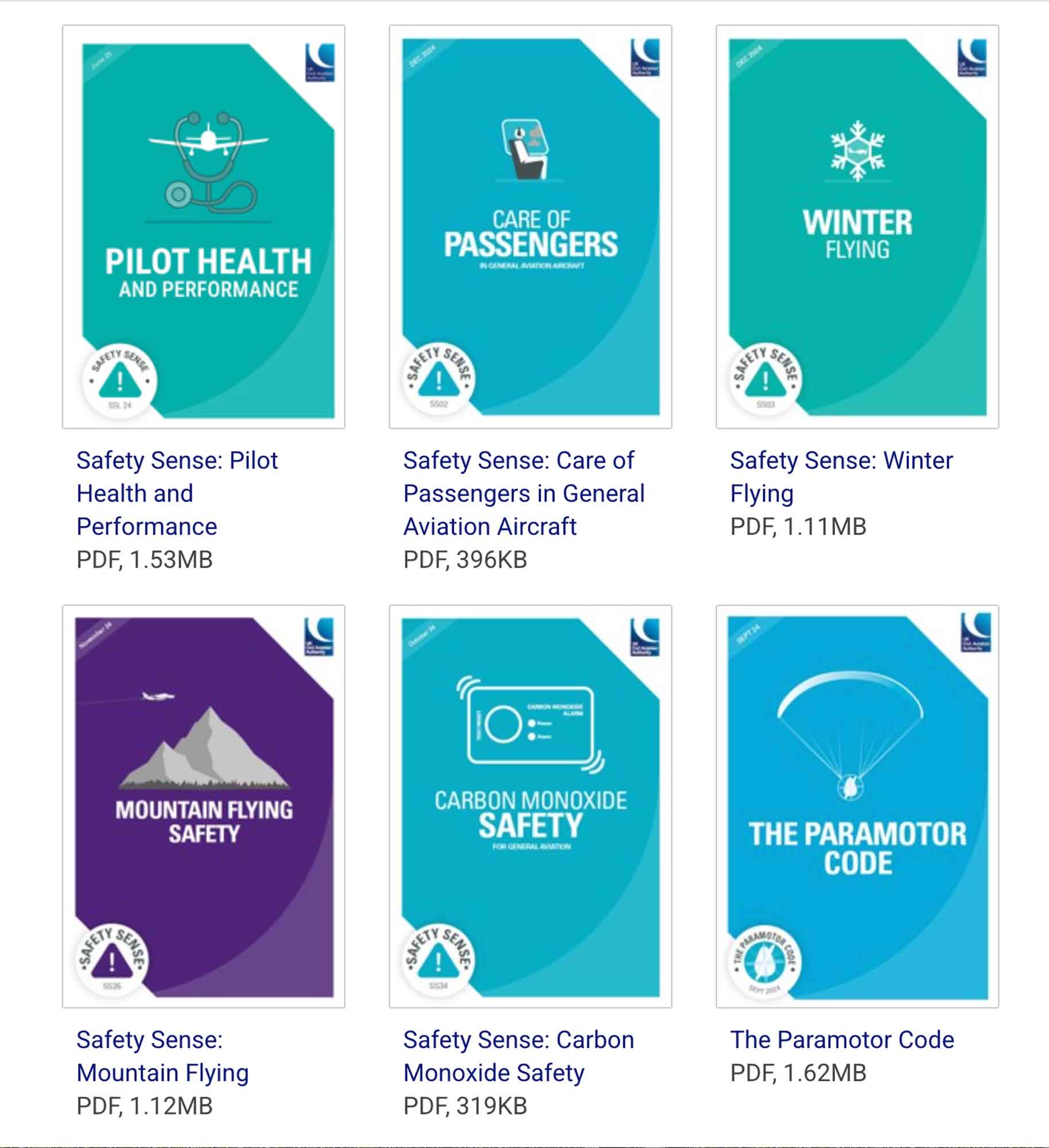
Just six of the 30-odd CAA Safety Sense leaflets

Just six of the 30-odd CAA Safety Sense leaflets

There are a host of pdf leaflets available free to download from the UK CAA, known as the Safety Sense series. They each cover one specific subject and are stuffed full of concise safety advice.

The leaflets are currently being revamped, one by one, to bring them up to date and easier to understand.

Click here to review the Safety Sense leaflets and download them individually.

Share

Leave a Reply

Share
Topics
Enjoy 1 Free article OR Join today to enjoy unlimited access to all content
Join today

We use cookies to give you the best online experience. Please let us know if you agree to all of these cookies.