A 3D printed part failed on a homebuilt aircraft causing it to crash on final approach to Gloucestershire Airport, according to an AAIB report released this week.
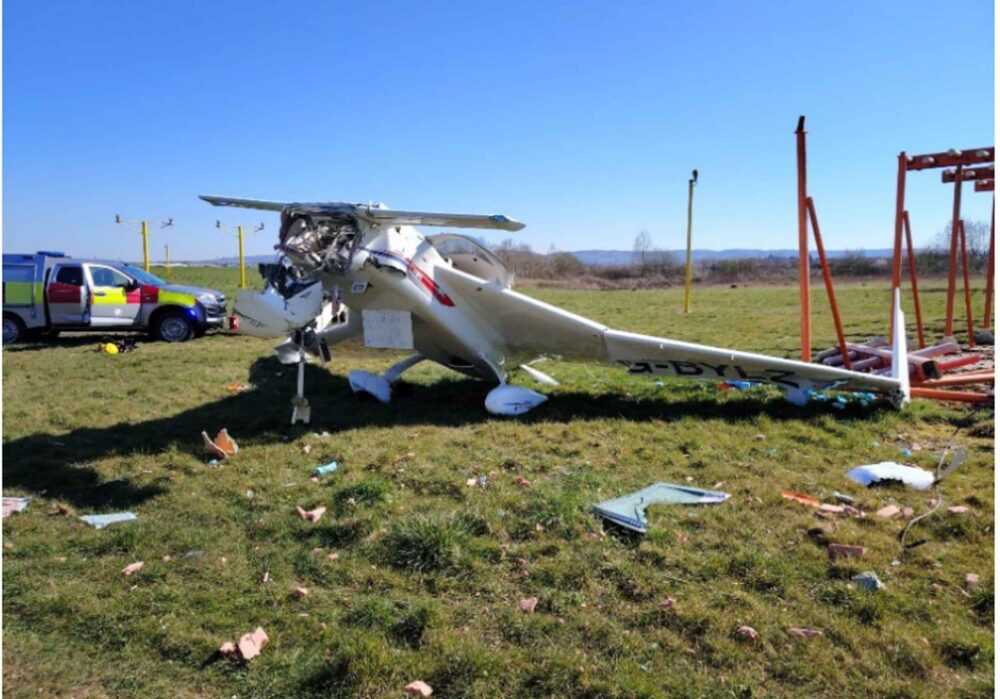
On 18 March 2025, the Cozy Mk IV aircraft G-BYLZ experienced a complete engine power loss during final approach to Gloucestershire Airport, resulting in the aircraft landing short of the runway and colliding with the ILS localiser antenna array.
The crash destroyed the aircraft and caused minor injuries to the pilot.
The loss of power was attributed to the collapse of a 3D-printed plastic air induction elbow, which restricted airflow to the engine.
The aircraft, manufactured in 1999, was equipped with a modified fuel system approved by the Light Aircraft Association (LAA) in 2022. The 3D-printed induction elbow, purchased from a vendor at a US airshow, was made from CF-ABS material, which had a lower glass transition temperature than the epoxy resin specified in the aircraft’s build manual.
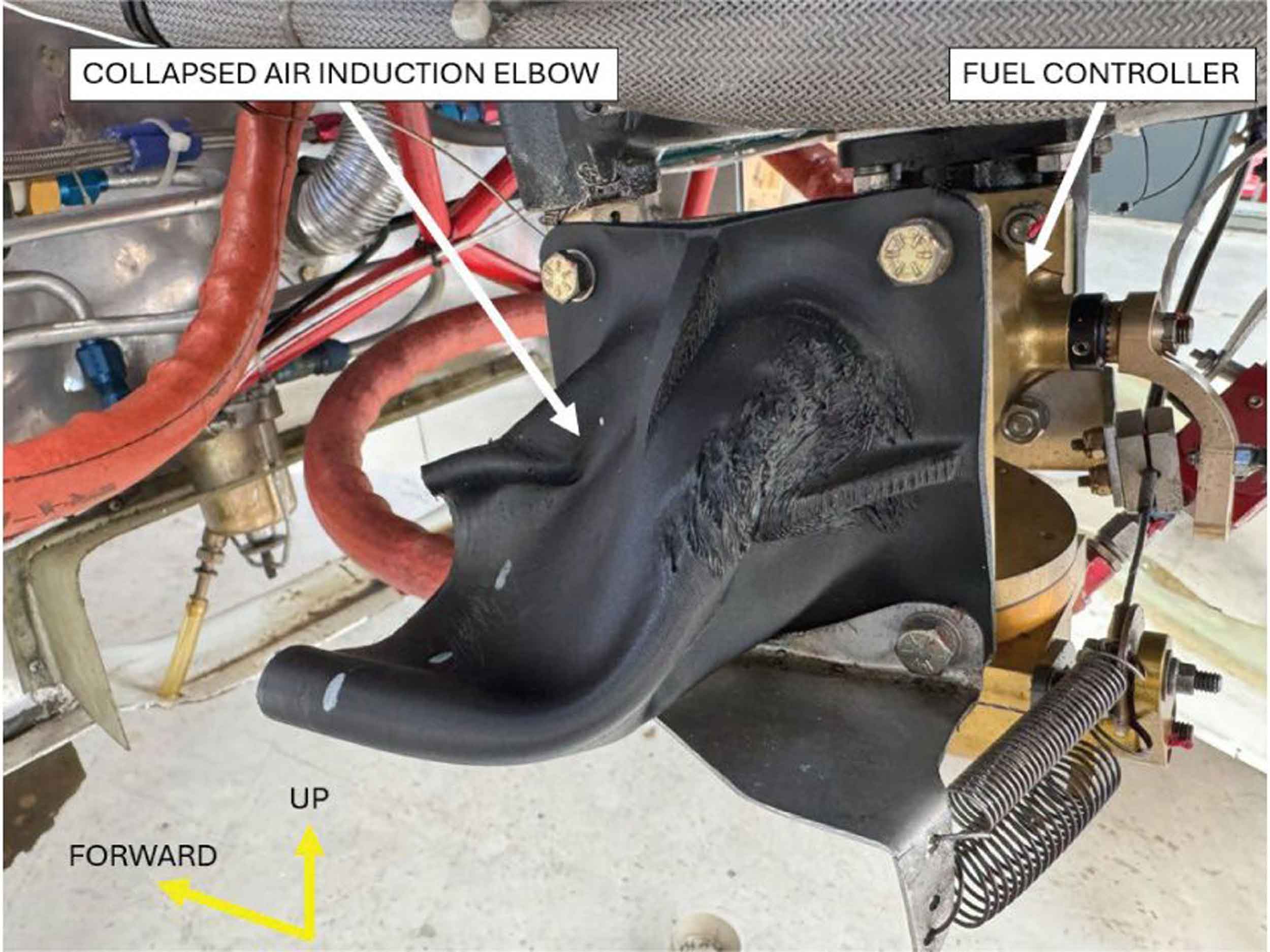
The 3D printed elbow collapsed restricting airflow. Photo: AAIB
The LAA was unaware of the elbow’s installation due to its omission from the modification parts list, preventing an airworthiness assessment.
In response to the accident, the LAA plans to issue an alert regarding the use of 3D-printed parts and will reference this in the Engine Type Acceptance Data Sheet for future aircraft inspections.
AAIB report
Stall on take-off ‘most likely’ led to fatal Spitfire replica crash
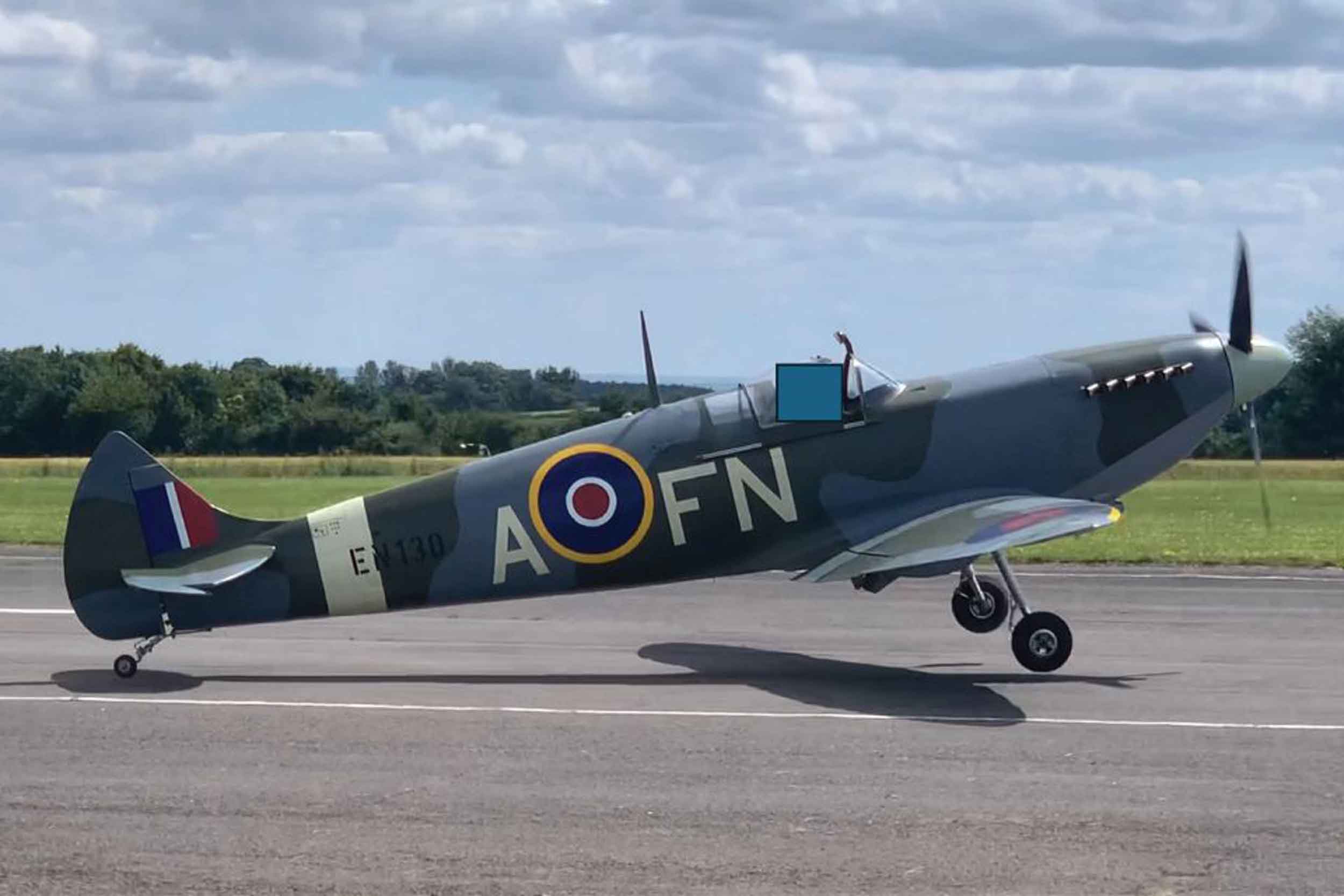
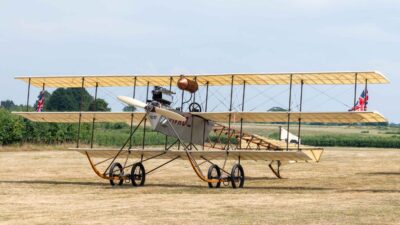
G-ENAA Supermarine Spitfire Mk 26B. Photo: AAIB
The AAIB report also released a report on the crash of Supermarine Spitfire Mk 26B kitplane at Enstone Airfield on July 28, 2024, resulting in the death of the 71-year-old pilot.
The aircraft, a 90% scale Spitfire replica, began its take-off run on tarmac Runway 26, said the AAIB. The initial part of the take-off appeared normal, but the aircraft began to yaw left, moving towards the edge of the runway.
As it approached the edge of the paved surface, the aircraft lifted off and pitched up rapidly, followed by a rapid roll to the left.
“The aircraft most probably stalled during the rapid pitch up, leading to a loss of control,” said the report. “The ensuing left roll and yaw were a result of a post-stall autorotation.
“The left wingtip struck the ground, and the aircraft came to rest inverted, where it immediately caught fire and was destroyed.”
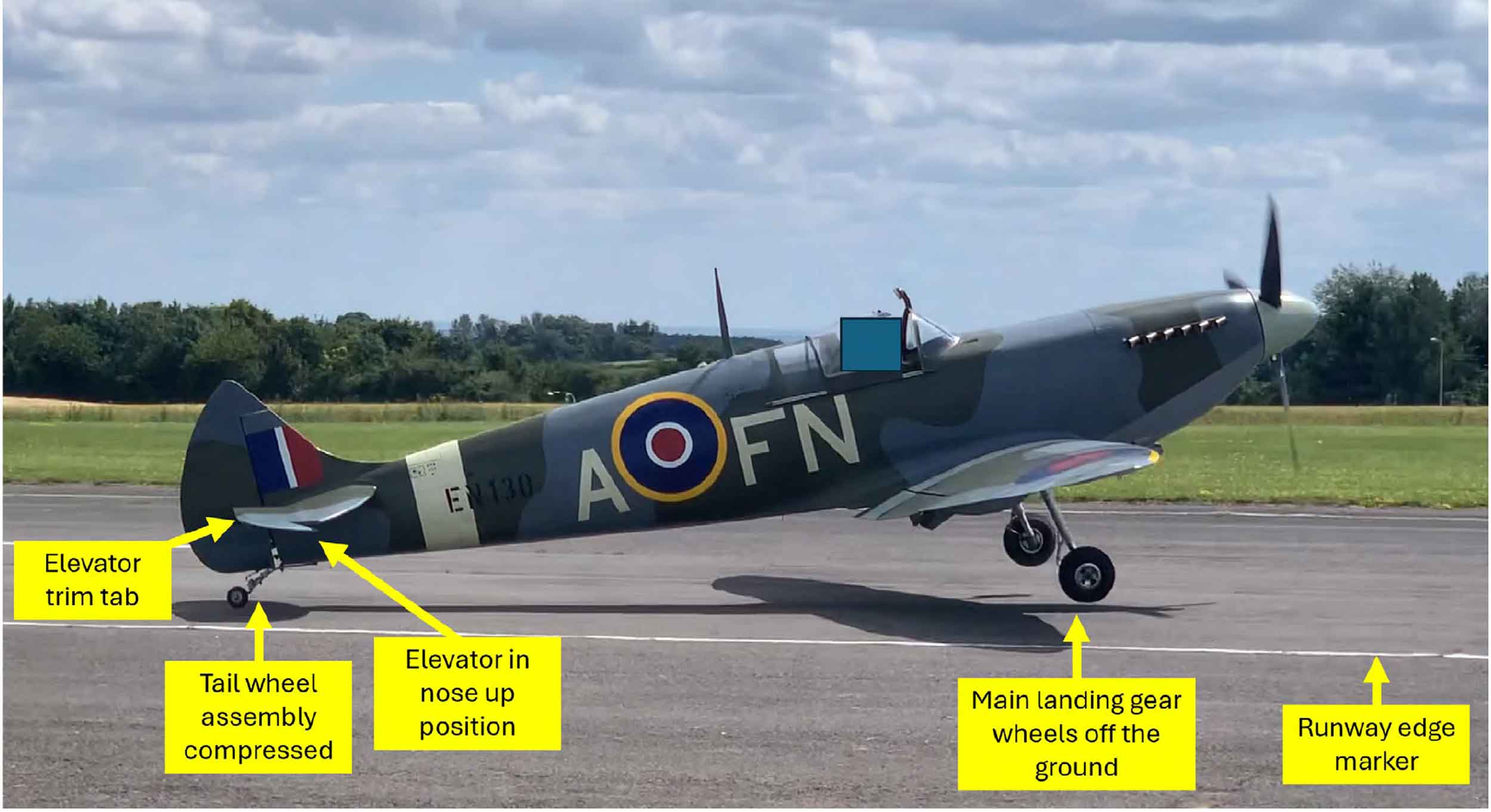
AAIB analysis of the take-off. Photo: AAIB
Post-mortem examination revealed coronary artery disease in the pilot, which could account for sudden cardiac death or severe chest pain that would impair his ability to control the aircraft.
However, the CAA’s view, based on observed control inputs (like the right-roll aileron), was that the pilot was likely not completely incapacitated.
In conclusion, the AAIB stated it was possible that the pilot did not control the yaw during the take-off run, initiated a rapid pitch up to lift off before running off the side of the runway and, in so doing, began the sequence of events.
Although the medical evidence did not permit a definitive conclusion, it was also possible that the reason for the loss of control was that the pilot became incapacitated to some extent during the take-off.
AAIB report