Learn to Fly

What does it cost to get a PPL(A)?

Part 6. Real Budgets & Smarter Spending

What does a PPL cost in the real world? We’ve made a realistic budget, based on six different UK flying schools. Plus: how can you save on costs?

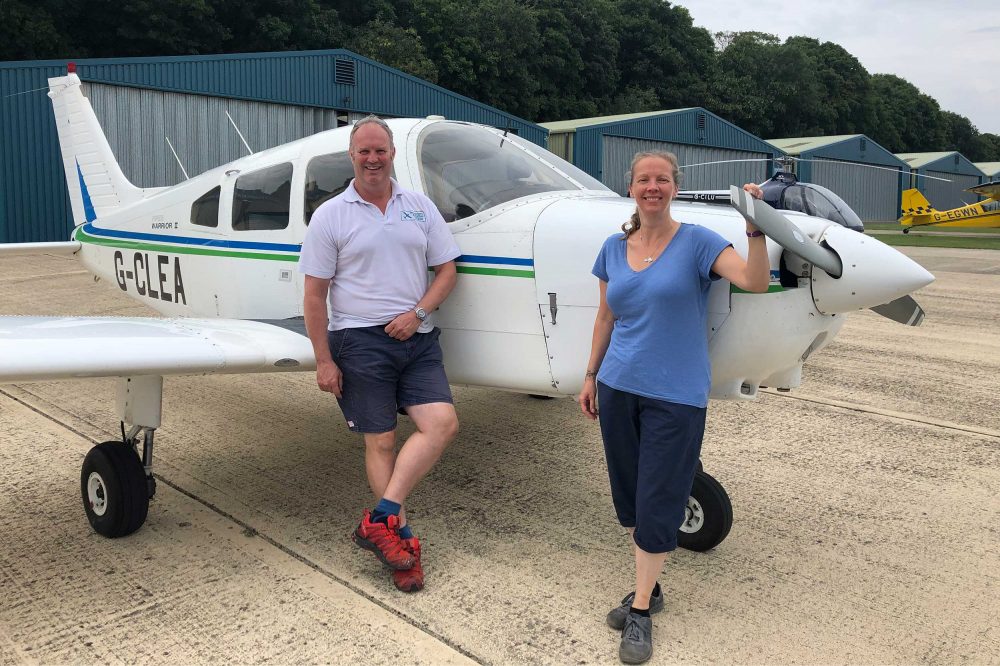
Claire Hatherall achieves her PPL with Freedom Aviation – well done, Claire!

What does a PPL cost for real? Total costs vary and are hugely dependent on the flying school you choose, as well as on your own pace of learning. Here are some UK examples.

Real budgets: six examples

Let’s assume you need 55 hours for your entire PPL course, including your Skill Test. During this training, you do 50 landings and 100 touch & go’s at the airfield where your flying school is located and spend £100 on away landings. You choose to self-study and pay £200 for learning materials. You pass all exams on the first attempt. You want to have your own headset and manage to get some decent flying equipment together for £300. The AME charges you £250 for a Class 2 medical and the examiner fee is £250 (unless these things are priced differently at the flight school). It takes you a year until you ask the CAA to issue your PPL and FRTOL. 

What does this cost?

Full Sutton Flying Centre, York

Flight training
55 x £220 per hour in a PA28: £12,100
1 year membership:  £120
Landing fees: 0
Touch & go fees: 0
Fuel surcharge: 0
Away landings: £100
Learning materials:  £200
Ground exams: £405
FRTOL: £150
Skill Test examiner fee:  £190
Class 2 medical:  £250
Licence application: £251
Equipment: £300
Total cost:   £14,066

Freedom Aviation, Cotswold Airport

Flight training 55 x £300 per hour in a Piper Warrior/Citabria: £ 16,500
1 year membership: £100
1 landing included per lesson:  0
Touch & go’s 100 x £10:  £1,000
Fuel surcharge: 0                                    –
Away landings:  £100
Learning materials: £200
Ground exams: £450
FRTOL: £180
Skill Test examiner fee: £200
Class 2 medical:  £120
Licence application: £251
Equipment:  £300
Total cost: £19,401

Perranporth Flying Club, Cornwall

Flight training 55 x £228 per hour in a PA-28:  £12,540
1 year membership: £180
Landing fees:  0
Touch & go fees:  0
Fuel surcharge: 0
Away landings:  £100
Learning materials:  £200
Ground exams: £378
FRTOL:  £150
Skill Test examiner fee: £180
Class 2 medical:  £250
Licence application: £251
Equipment: £300
Total cost: £ 14,529

ACS Aviation, Scotland

Flight training Course of 40 hours in a Tecnam P-Mentor:  £11,000 + 15 x £270 per hour in a Tecnam P-Mentor:   £ 4,050
1 year membership: £270
Landing fees:  included in course price
Touch & go fees:  included in course priceFuel surcharge:   0                                                  –
Away landings: £100
Learning materials:  £200
Ground exams: included in course price
FRTOL:  £175
Skill Test examiner fee: £424
Class 2 medical:  £250
Licence application:  £251
Equipment: £300
Total cost:  £ 17,020

Carlisle Flight Training, Cumbria

Flight training: Course of 45 hours in a Robin HR200:  £10,500 + 10 x £250 per hour in a Robin HR200:  £2,500
1 year membership:  £120
Landing fees, 50 x £13:  £650
Touch & go fees, 100 x £13:   £1,300
Fuel surcharge:  0
Away landings: £100
Learning materials: £200
Ground exams: £465
FRTOL: £200
Skill Test examiner fee:  £250
Class 2 medical:  £200
Licence application:  £251
Equipment:  £300
Total cost:  £ 17,036

ANT, Blackpool

Flight training: 1 x 5 hour starter pack in a Cessna 150: £997 _ 5 x 10 hours block in a Cessna 150: £9250
No membership fees
Landing fees, 50 x £15:  £750
Touch & go fees, 100 x £15: £1500
Fuel surcharge:  0
Away landings:  £100
Learning materials: £200
Ground exams: £360
FRTOL: £200
Skill Test examiner fee: £200
Class 2 medical: £250
Licence application:  £251
Equipment: £300
Total cost: £ 14,358 


Why is flying so expensive?

Obtaining your PPL is a significant financial investment wherever you do it. But some flying schools are more expensive than others. The totals in our examples range from £14,066 to £19,401. These variations depend on lots of things, including the flying school’s location, operating costs (such as insurance, fuel prices, maintenance, checks and repairs), type of aircraft they have, and the landing fees that are charged at the airport.

Apart from the costs mentioned above, also the general inflation is reflected in the training prices. Alan Rayson, CFI and owner of Carlisle Flight Training, explains: “In the last few years it’s mostly just a steady price drift upwards; fuel has been fairly steady, maintenance and parts are up. We’re paying instructors more, but many would say flight instructors have been very underpaid for a long time, so that might be a good thing?”

Some of the cheaper training options are offered by not-for-profit flying clubs. With these clubs, all profits they make go back to their members – which includes you when you train there. Ben Ellis, Head of Training at Perranporth Flying Club, states, “We’re a not-for-profit flying club and we offer flying training for what it actually costs. Inflation has risen, but in keeping with our ‘club’ ethos, we’ve absorbed this as much as possible.”

It’s never going to be cheap. However, there are some things you can do to make your PPL training a bit more affordable.

Get your PPL and go flying!

Five tips to reduce the cost of your PPL(A)

1 Fly regularly

Newly learned skills fade quickly and since flight training makes for a huge part of the total cost of your PPL, this is where you can save some serious money. Having big gaps in training means you’ll end up spending more. Do you only fly once a month? In that case, every month you’ll need to repeat at least part of the previous lesson. Flying several times a week? Not so much.

You’ll spend less if you can do all your PPL training in a short time. How? By setting enough time (also check the aircraft and instructor’s availability!) and money aside. And by making sure you’ve done your homework. “Learn the checks that need to be memorised and study for the exams. Basically, if the students put the work in, it will save them money,” advises Sarah Letheren, Director of Freedom Aviation. 

Another important factor if you want to fly regularly: weather continuity benefits. Choose the right season for your flight training so lessons aren’t cancelled because of bad weather. Here in the UK, spring is a great time to start PPL training.

2 Buy smart (block hours)

 Pay-as-you-go or package deal? That depends on your situation and personal preference. However, we don’t advise paying for an entire course upfront. Unfortunately, there have been a few cases of flight schools going bust, still owing training to students.

 However, many flying schools offer discounts if you buy training hours in bulk, i.e. ten or twenty hours. Ask for package deals and block hours pricing.

 Whatever you choose, it’s common sense to fly and train with the flying school for a few hours before committing your future – and large sums of money – to them.

3 Choose a basic aircraft

Some flight schools offer a choice of aircraft. The smaller, lighter, and less advanced the aircraft, the less you’ll be paying for flight training.

 Don’t have much money, but want some experience in a four-seater since you’re planning to take friends flying once you’ve obtained your PPL? It might be possible to do most of your training in the cheaper two-seater, but also do a few hours in the four-seater to get used to it.

4 Consider other locations

Costs depend on location. If your local flying school is very expensive, check if it’s cheaper to do your PPL in another place. Or perhaps you can take a few months off and do the entire course abroad?

Before booking the entire course elsewhere though, add up all your expenses. The flying club at the other end of the country might be £50 cheaper per lesson, but is it still better value when you take all the travel time and petrol and/or accommodation costs into account?

5 Get a scholarship or bursary

Don’t see any way at all of paying for your PPL after reading this article? Don’t give up just yet. There are quite of few organisations who offer scholarships and bursaries for student pilots.  

The Honourable Company of Air Pilots usually has several full PPL scholarships a year (meaning you’ll only have to pay for your Class 2 Medical, all other costs are covered). The Air League has annual 3, 5, and 12-hours flying scholarships. The Royal Aeroclub Trust has several bursaries for those aged 14-24. 

For women, there’s the possibility to get a scholarship from the British Women Pilots’ Association (BWPA). And RAF Air Cadets have opportunities for current or former cadets. Also, individual flying schools sometimes offer reduced rates for young pilots.

Choose wisely

Is it worth comparing the options at different flying schools to save money? Definitely! But smart decisions affect total cost more than chasing the cheapest headline price. Also, don’t let £250 difference in the grand total decide where you’re going. More important than the price, is that you enjoy your flight training.

Therefore, choose the flying school that feels right for you and the instructor you’ve got a click with; after all, you’ll be spending a lot of time in a small cockpit together. Try a few schools (and/or different instructors) before making your final decision. And if the perfect fit is more expensive, then so be it. When it comes to getting your PPL(A), enjoyment and instructor compatibility matter more than marginal savings.

 That’s it! Go flying!

Click here to go back to Episode 1

Share

Leave a Reply

Share
Topics
Enjoy 1 Free article OR Join today to enjoy unlimited access to all content
Join today

We use cookies to give you the best online experience. Please let us know if you agree to all of these cookies.