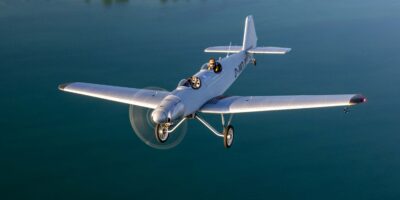
When WACO Aircraft added floats to their new-build classic it just added fun in spades, or should that be buckets? With news just in that the WACO Aircraft factory has closed their doors this week, we thought it was a good time to revisit June 2018 when FLYER spent some time messing about on the water with a WACO…
Words: Ian Seager Photography: Ed Hicks
1 May 2026
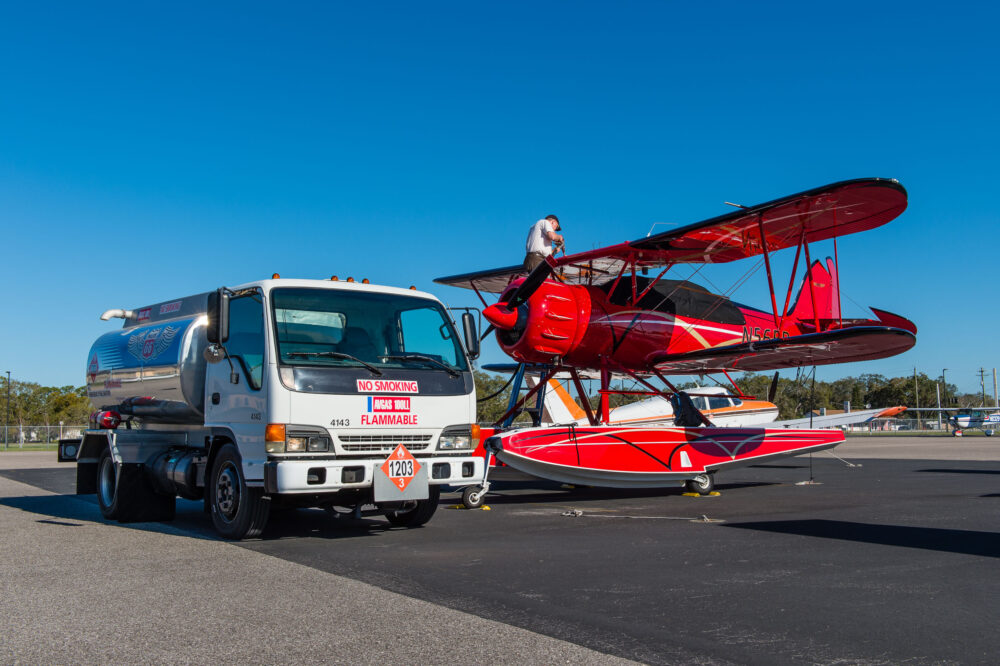
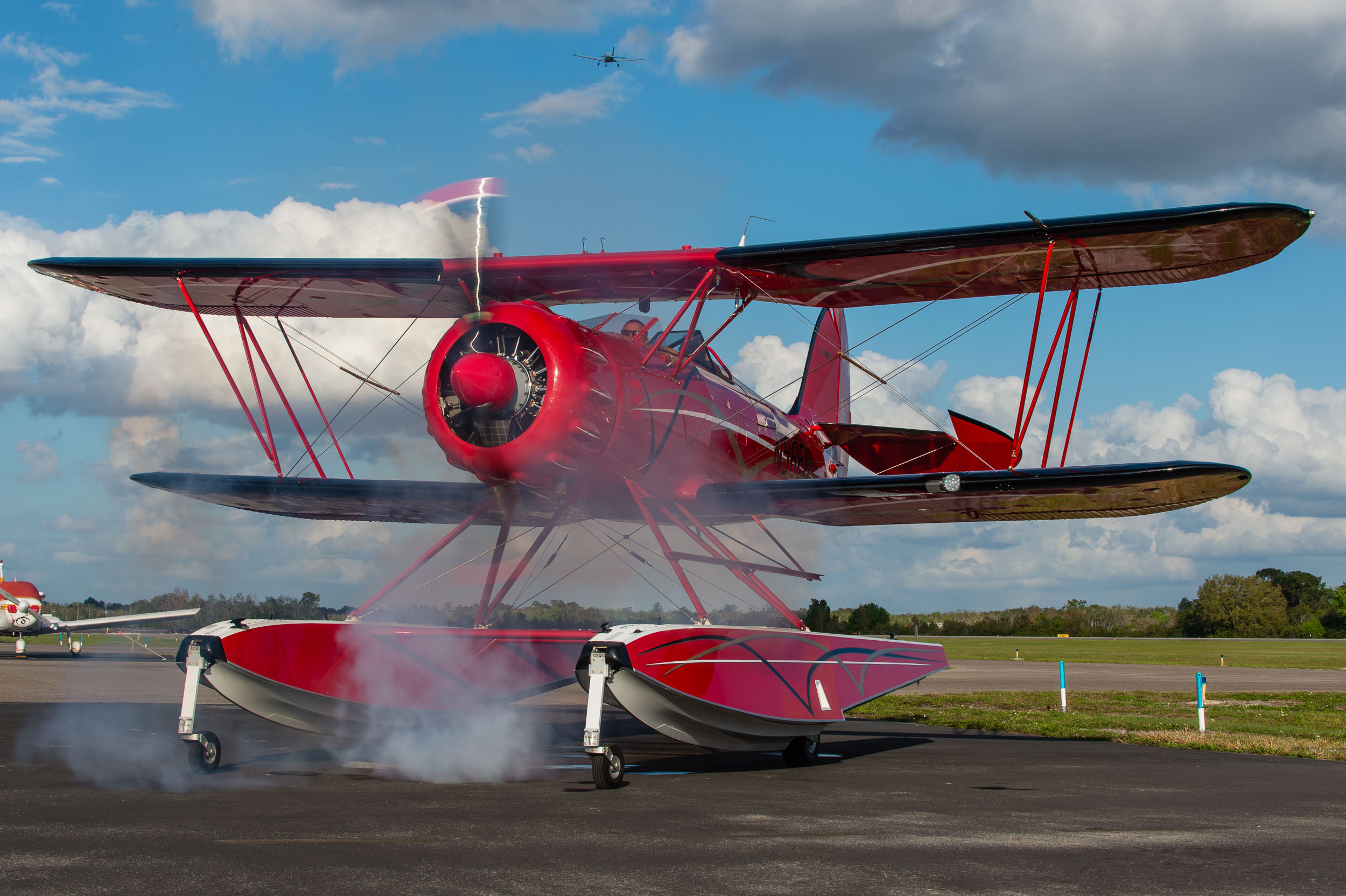
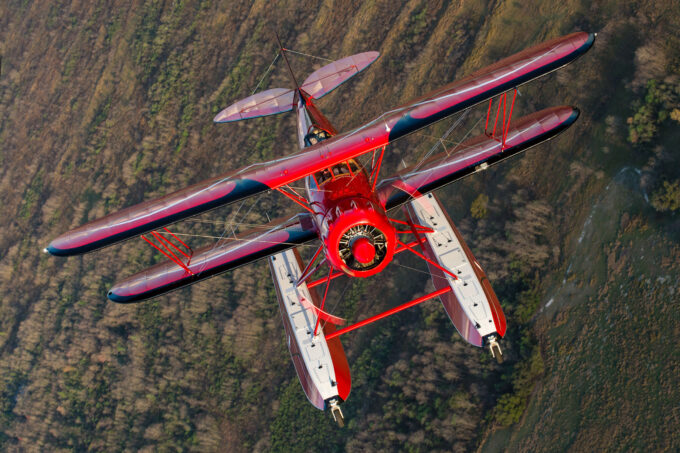
We were driving along US 92, heading for Winter Haven’s Gilbert Airport, when we spotted it, from about half a mile away. Sporting bright red paint, it dominated the FBO’s ramp – the Twin Bee, PC-12 and the usual collection of ageing GA singles that dared to share the same space were meekly hiding in the shadow of the classic biplane, which towered above them. Today was going to be a good one – the Florida sunshine was bright and the sky deep blue, but above all I’d be flying a WACO biplane, better still, one on floats…
The WACO story started in Ohio during 1920, when the Weaver Aircraft Company (quickly shortened to WACO) was founded. The first of the F series models appeared in the thirties and the YMF itself (the Y relates to the engine, the M to the airframe type and the F to the series) was born in 1934. The company ceased operations in 1947, but in 1986 a new company known as WACO Classic Aircraft re-certified the aeroplane and started building the YMF Classic.
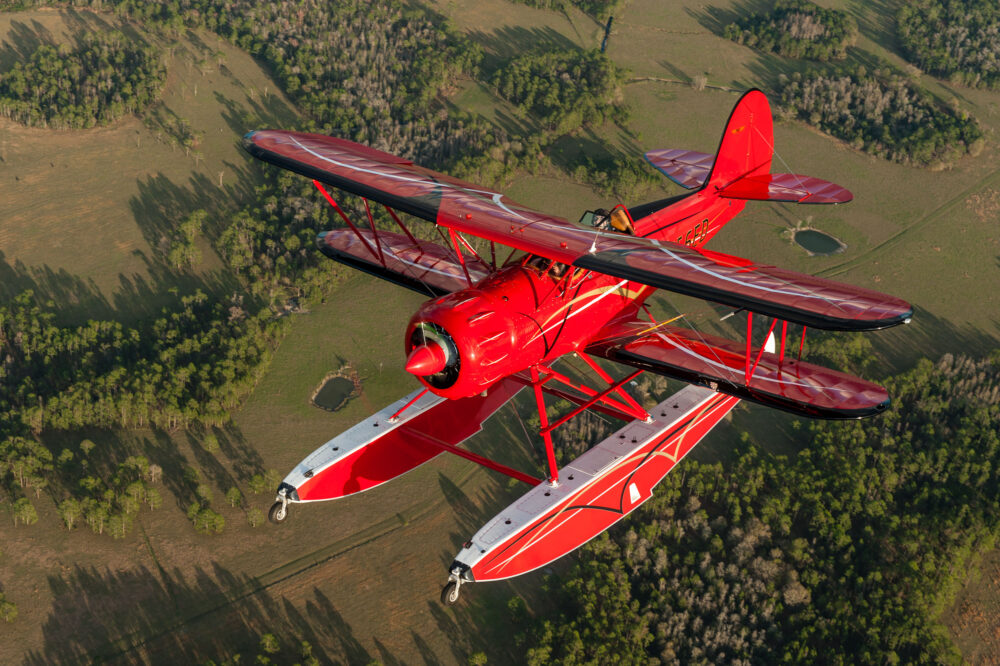
In 1992 the YMF-5C Super was launched. It came with better internal space, more payload, a balanced rudder and a bigger passenger entry door for the front cockpit. In 1999 the company moved to Battle Creek, Michigan, and in 2008 was sold to its current owners, Peter and Jon Bowers. In 2009 the 5C was superseded by the 5D, which offered more power, thanks to a 300hp Jacobs radial, among other things. The YMF-5D is the current production model, and the aeroplane owning the Winter Haven ramp that morning was the YMF-5F, with the F standing for Floats.
Irresistibly attracted to the aeroplane – like every other person stepping out of the FBO’s doors that day – we walked over to find WACO’s Peter Bowers and the company’s sales pilot, Jerry Rea, giving the YMF-5F a final polish. If it looks imposing from a distance, I swear that, up close, you can almost shut your eyes and feel its presence.
The standard, wheeled WACO YMF-5 isn’t small, but add a pair of Aerocet 3400 amphibious floats and it tops out at 3.75m high – you could do yourself some serious damage just falling off this thing during the walkaround!
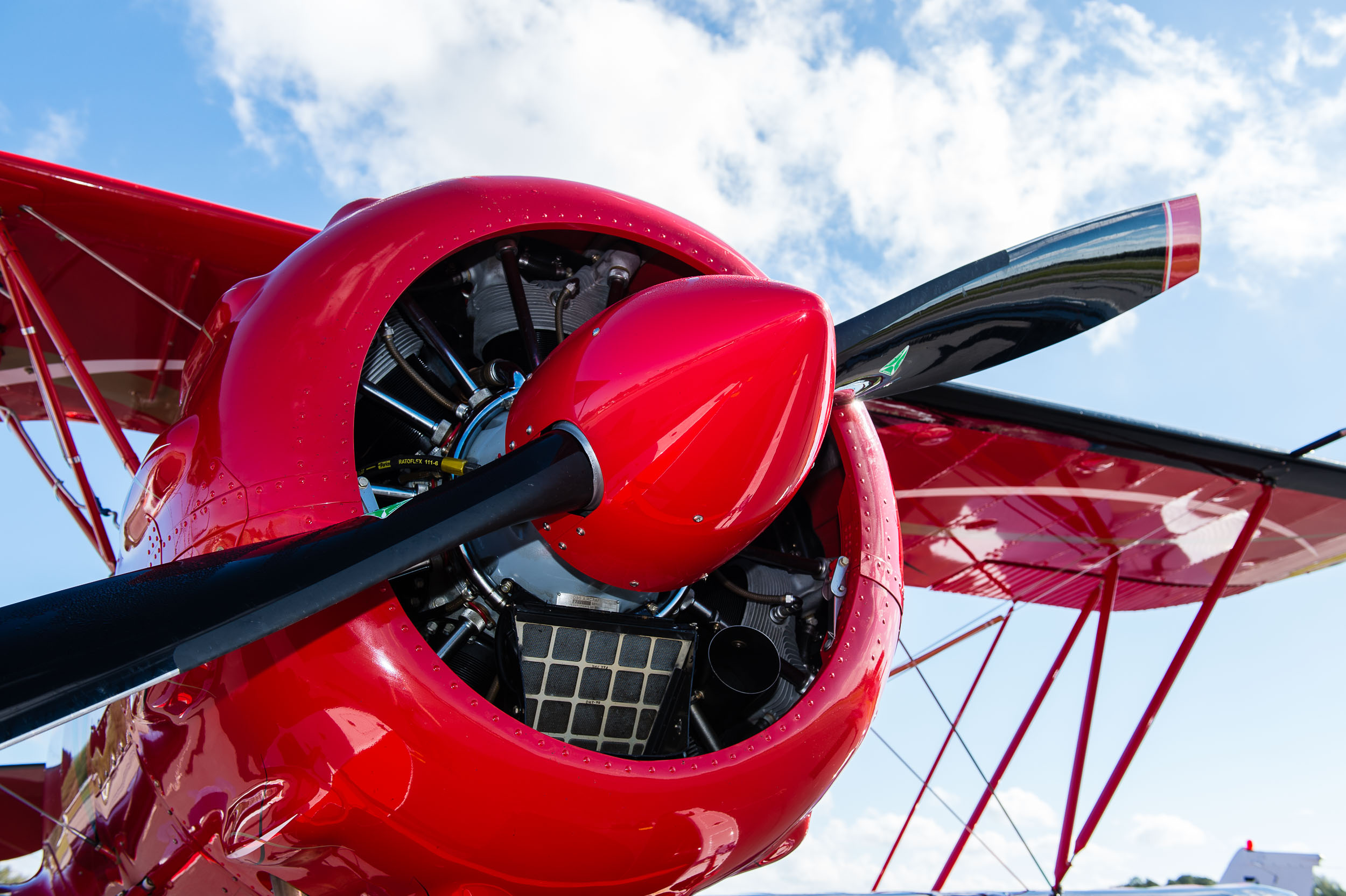
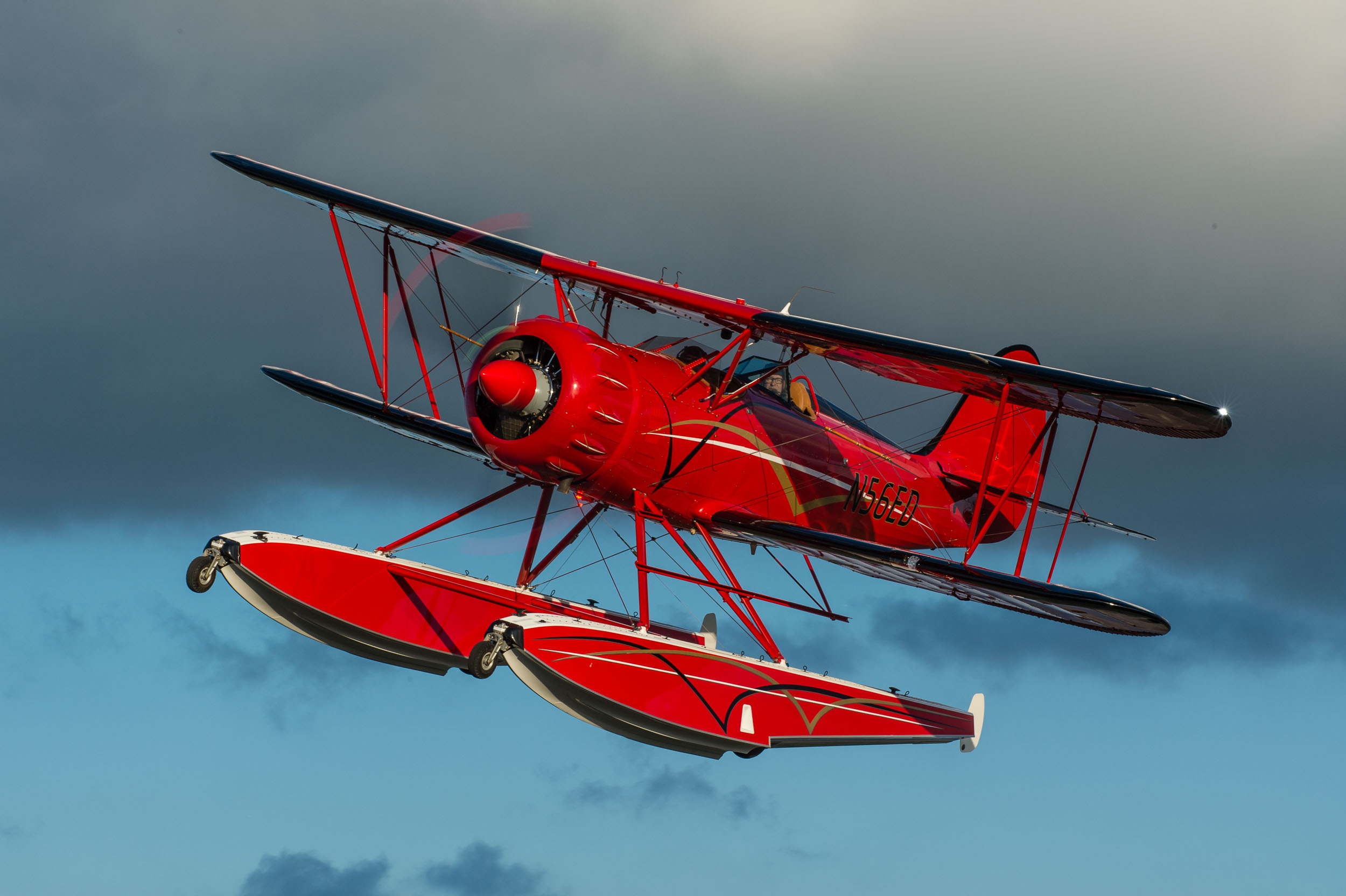
Up front there’s a beautifully-cowled, seven-cylinder, 300hp Jacobs radial, driving a two-bladed, composite MT prop that’s a massive 97in (nearly 2.5m!) in diameter. The oil dipstick is under a flap at the top of the engine, so it was up on the float to get access – while we’re on the subject of oil, the prop needs pulling through a few times to check that none of it has pooled in the cylinders. Trying to start the engine in this condition would, once again, prove that liquid isn’t compressible and mistakes in aviation often require a large application of money to fix. It was noticeable that all of the YMF-5’s fittings and wires are stainless steel, and that the bottom of its surfaces have more than a few seaplane grommets fitted so that any water taken on board will drain away.
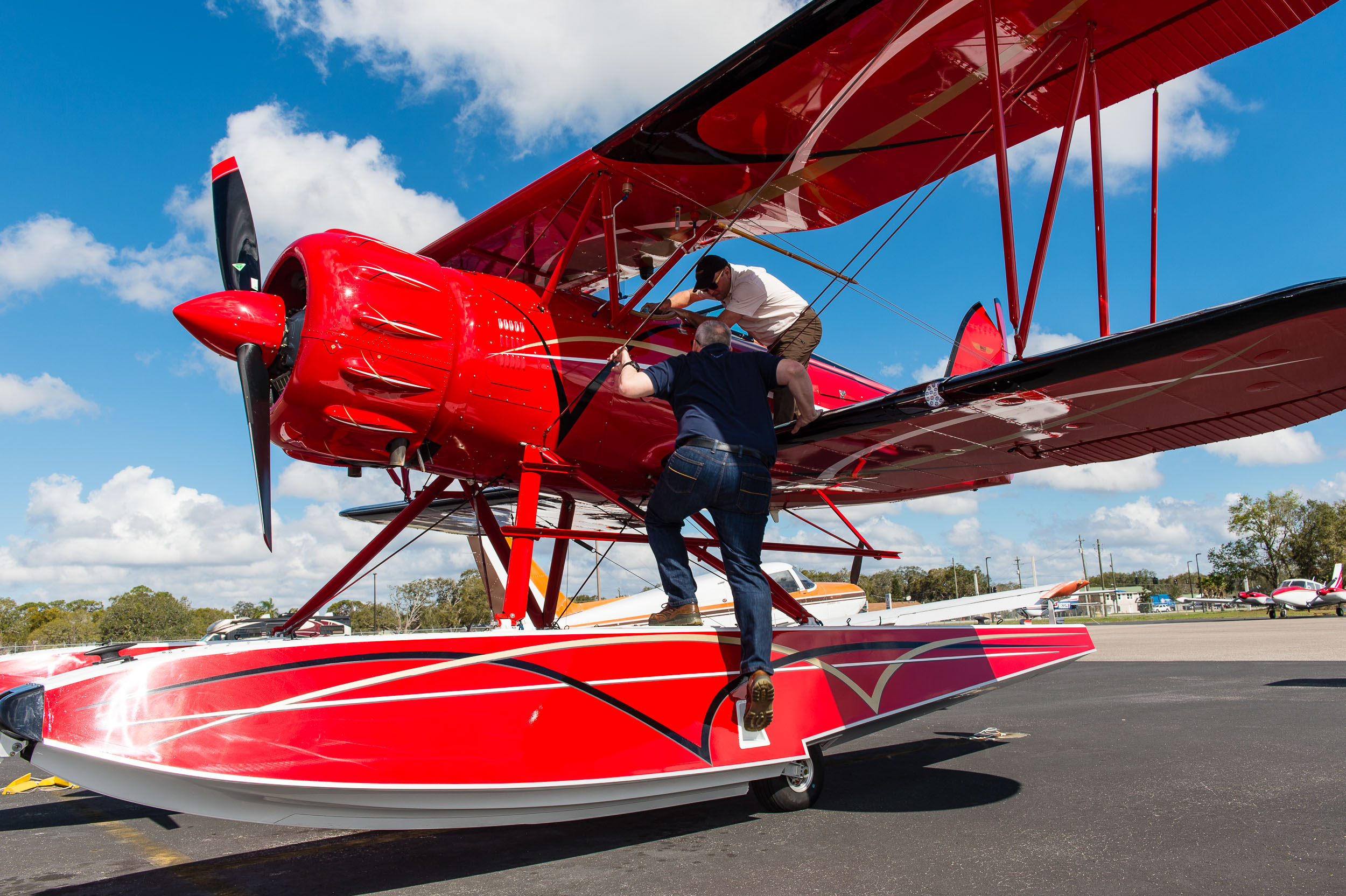
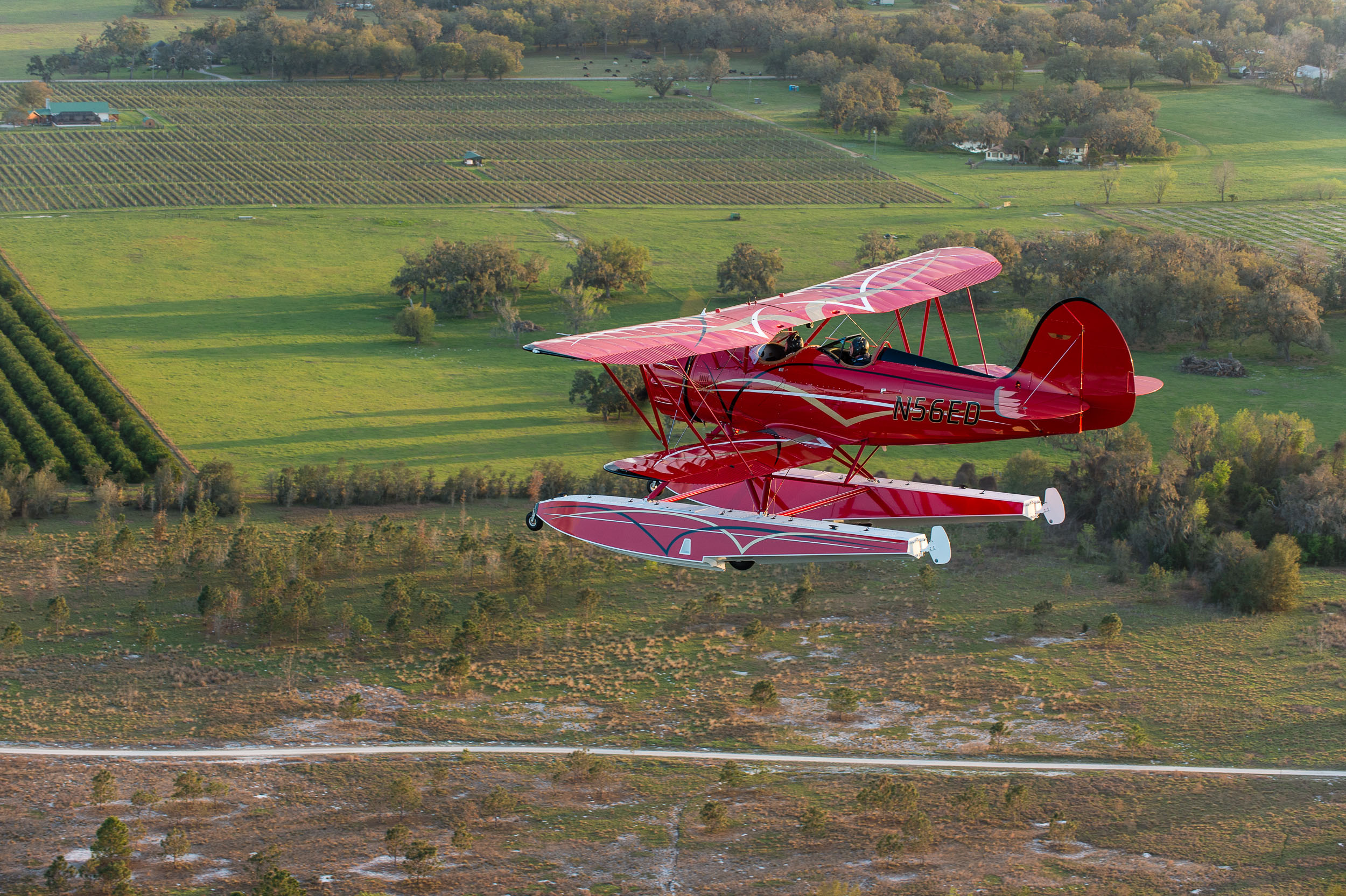
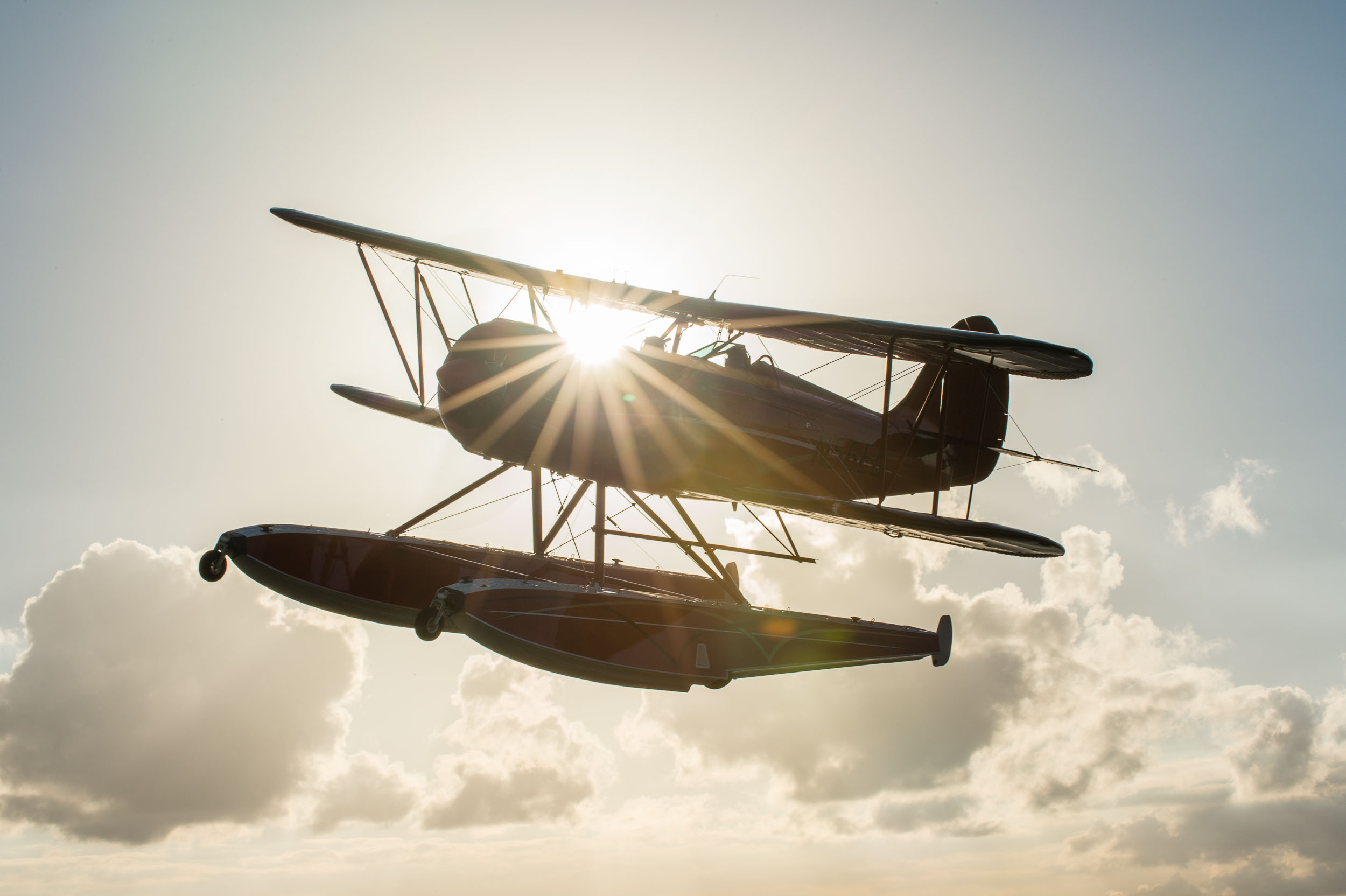
The amphibious floats are Aerocet 3400s, the number relating to the buoyancy in lbs, and they’re composite with six sealed compartments per float, one of which provides a substantial baggage area, with a maximum capacity of 100lb.
The main gear is on a trailing link oleo system and has the hydraulic brakes, while the front is fully castoring and sits on the end of a long composite beam which acts like a spring. When retracted back into the float, the front tyre serves as a rubber bumper for water operations. Retraction of all four bits of undercarriage is electro-hydraulic.
The same amphibious floats are used on the Cessna C180/185 or C206, and should you fancy a pair, the Aerocet factory in Idaho will sell you some for $94,500. You might think that sealed composite floats would never take on water but you’d be wrong, so each compartment also got a quick pump out (via a hand pump, which was fitted into each tank in turn) as part of the pre-flight. The only thing left before flying was to take some fuel – we called the bowser and gave instructions for the driver to bring the big ladder. The WACO’s fuel tanks, which hold a total of 44usg between them, are in the centre of the top wing that’s a long way up!

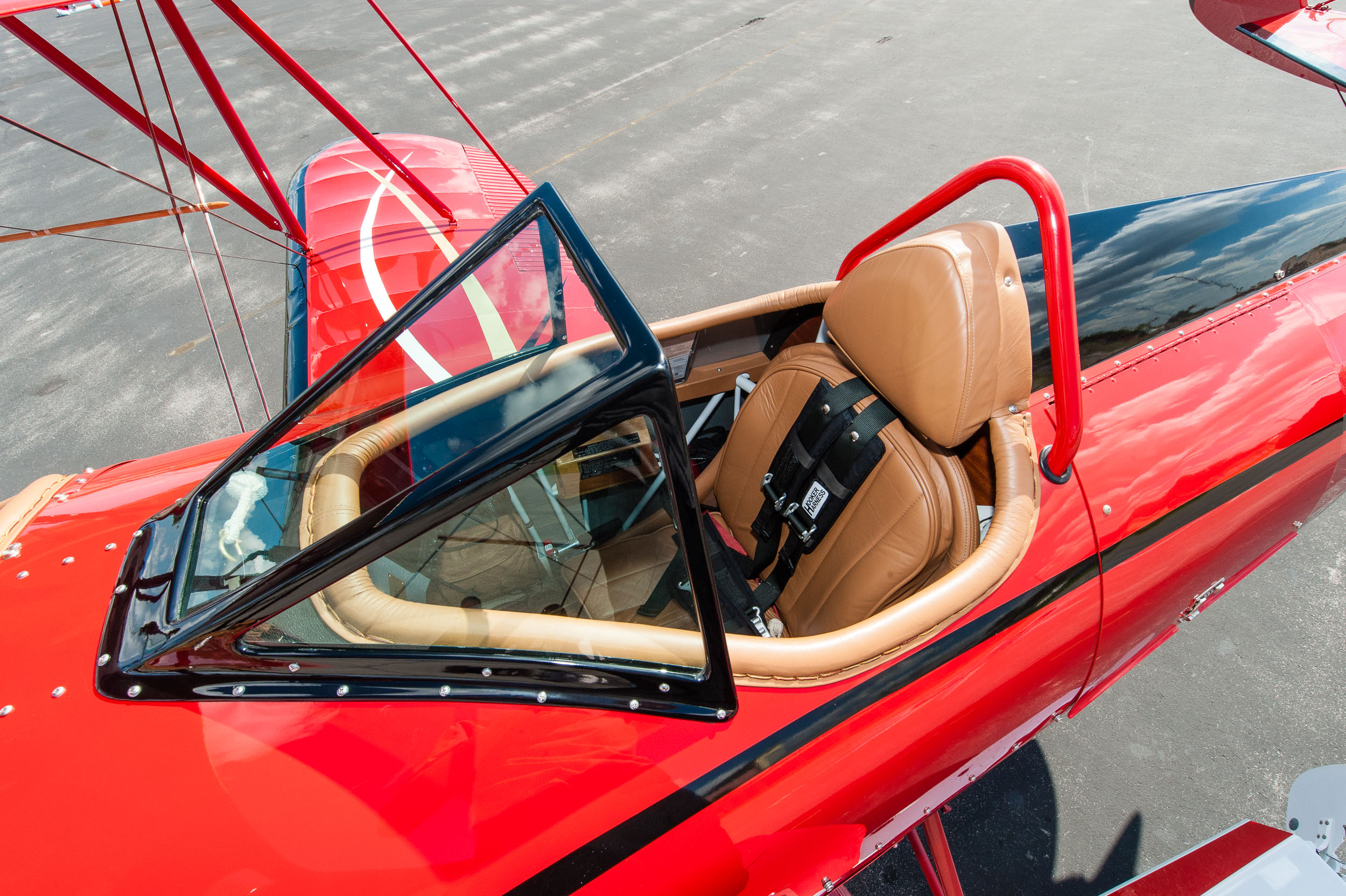
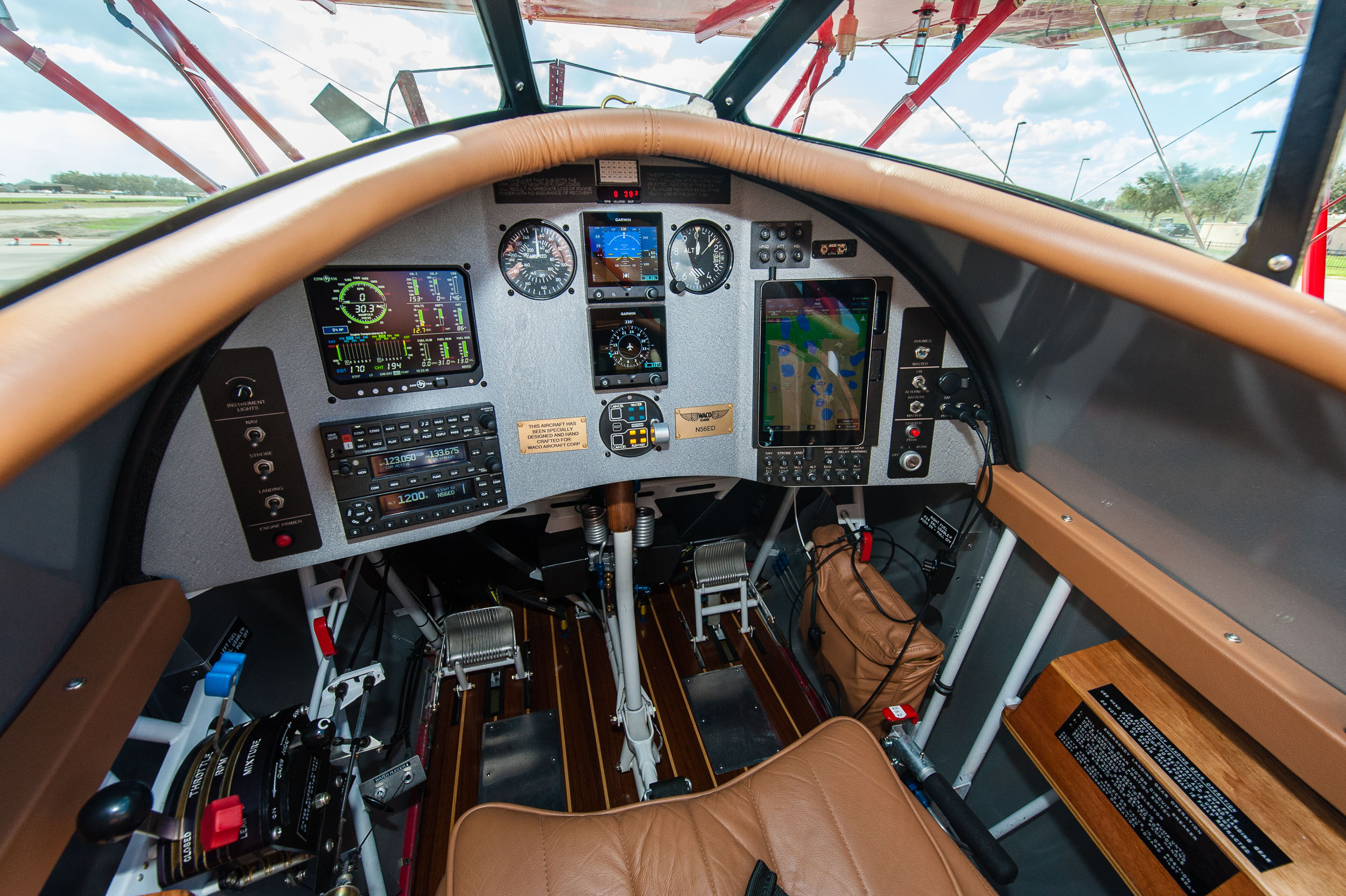
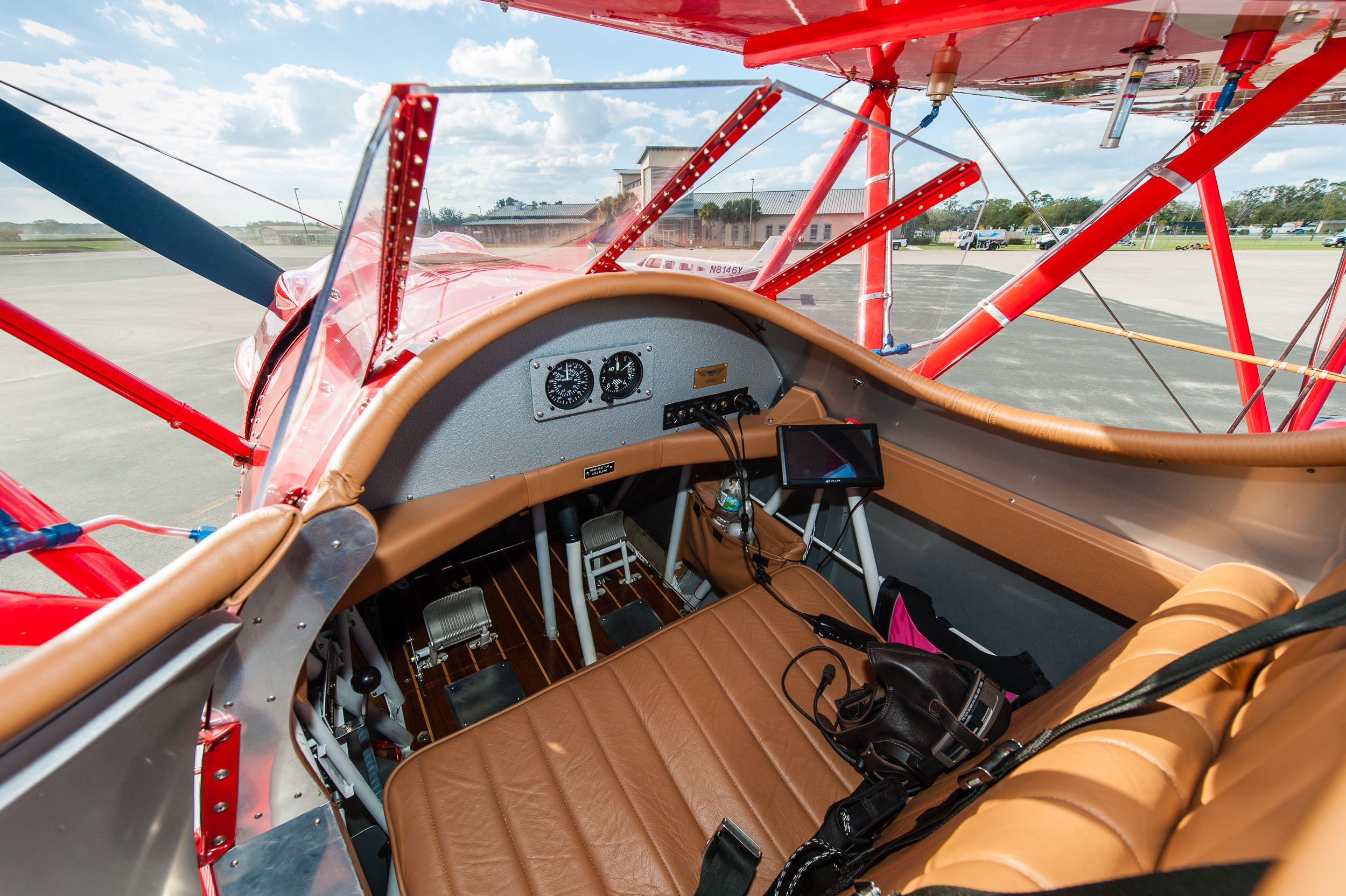
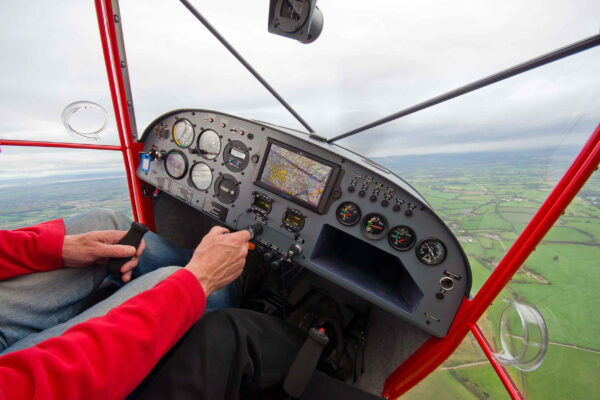
Did I mention that the WACO is a three-seater? Used in aerial tourism mode, there’s room for two in the cavernous front cockpit, and although it’s currently set up with dual controls and instruments, they’re limited to stick, throttle, rudder, ASI and altimeter. Happily, Peter offered me the back seat, which has all sorts of luxuries, including trim, prop, mixture, starter, primer, radio, transponder, a couple of Garmin G5s and a JPI EDM-930 – all of the instrumentation you need – oh, plus an iPad for nav…
From the ground, it looked like getting into the rear cockpit would involve some kind of trapeze act. Fortunately, the reality proved different and I was soon strapped in and ready to start. Right, starting a radial, that’s usually a bit of a palaver, isn’t it? Well, not this one – master on, twelve seconds on the primer button, mags to both and press the starter, then there’s that gorgeous radial starter sound, followed by the cylinders getting themselves organised in the correct firing order. Smoke swirled around us for a few seconds – it was just bloody lovely.
Winter Haven has a couple of hard runways and the wind was right down one of them. Sadly, that runway was closed for some building work, so it was going to be a longer taxi and a bit of a crosswind type day. Thanks to the level attitude of the fuselage, the view forward is okay, and it turned out that differential braking on a four-wheel amphib is pretty precise. It also turned out that, between the big fuselage and the floats, a fresh crosswind will want you to make like a boat, but we got to the runway with the only minor embarrassment being my tendency to ride the brakes a bit. Oops…
I was more than a little apprehensive as we lined up and I pushed the throttle forward in this beautiful, new-to-me aeroplane. My backside was at about the height that I’d begin to think about flaring to land, rather than accelerating to take off, but we were gathering speed and I guess I should’ve been grateful that the crosswind from the right was just trying to push us off the runway rather than encouraging the aircraft to swap ends. I’m not a huge fan of that period when you’re way too fast to taxi but still too slow to fly, and as we broke ground I allowed myself a small smile and the reward of a lungful of air. Given the Waco’s size, I sort of expected the controls to be heavy and ponderous but they’ve a pretty nice feel.
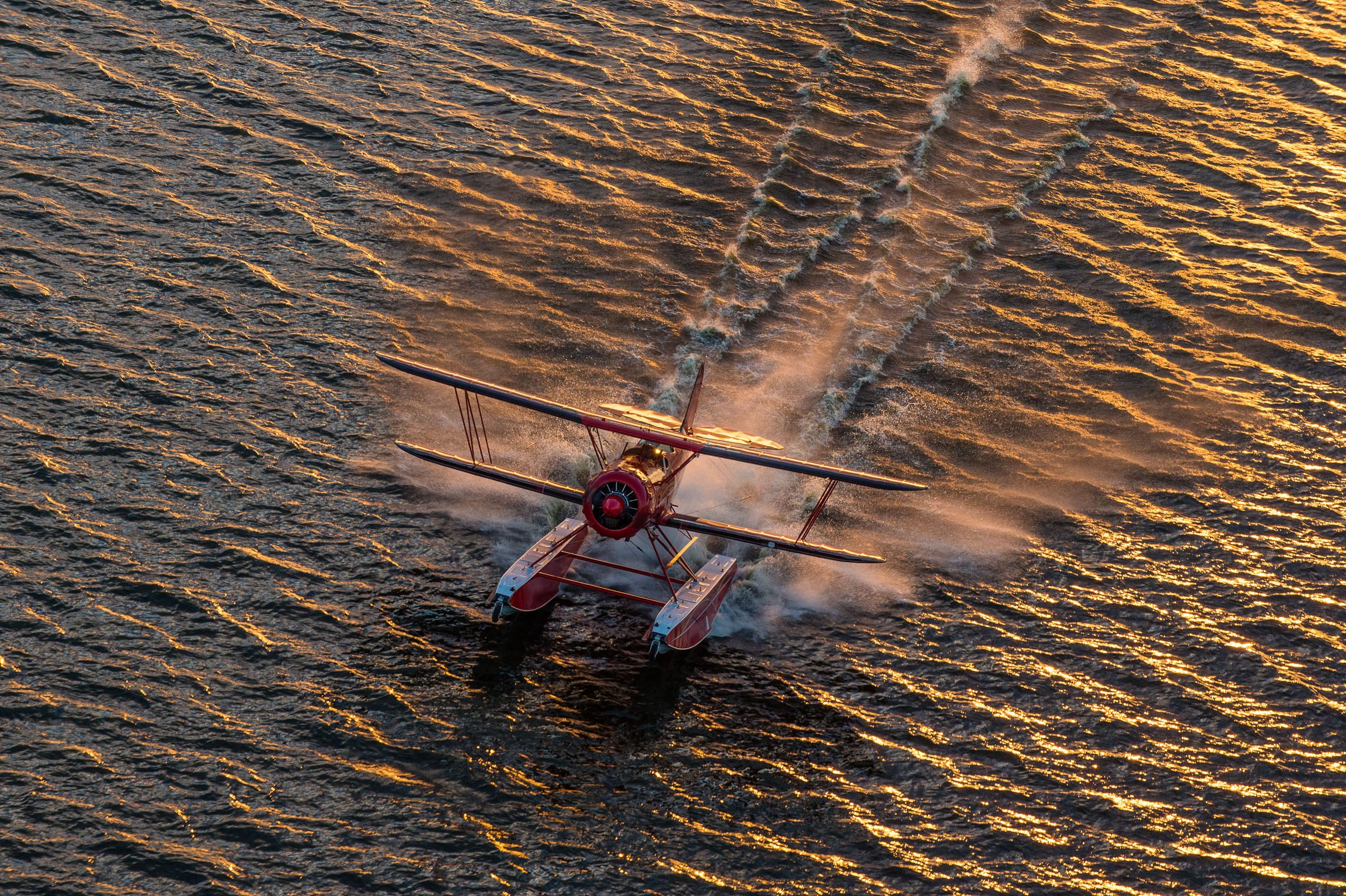
Peter prompted some power changes and we were soon burbling along with with the big prop turning lazily at about 1,900rpm, and with something like 23in of MP and the mixture pulled back, we were burning about 14usg (64 litres) per hour and showing just under 100mph on the ASI – it’s almost rude to talk about numbers in this aeroplane’s company. The WACO isn’t about economy, speed or getting from A to B effectively. Rather, it’s about fun and flight in one of its purest forms, and this particular WACO is also a lot to do with messing about on the water.
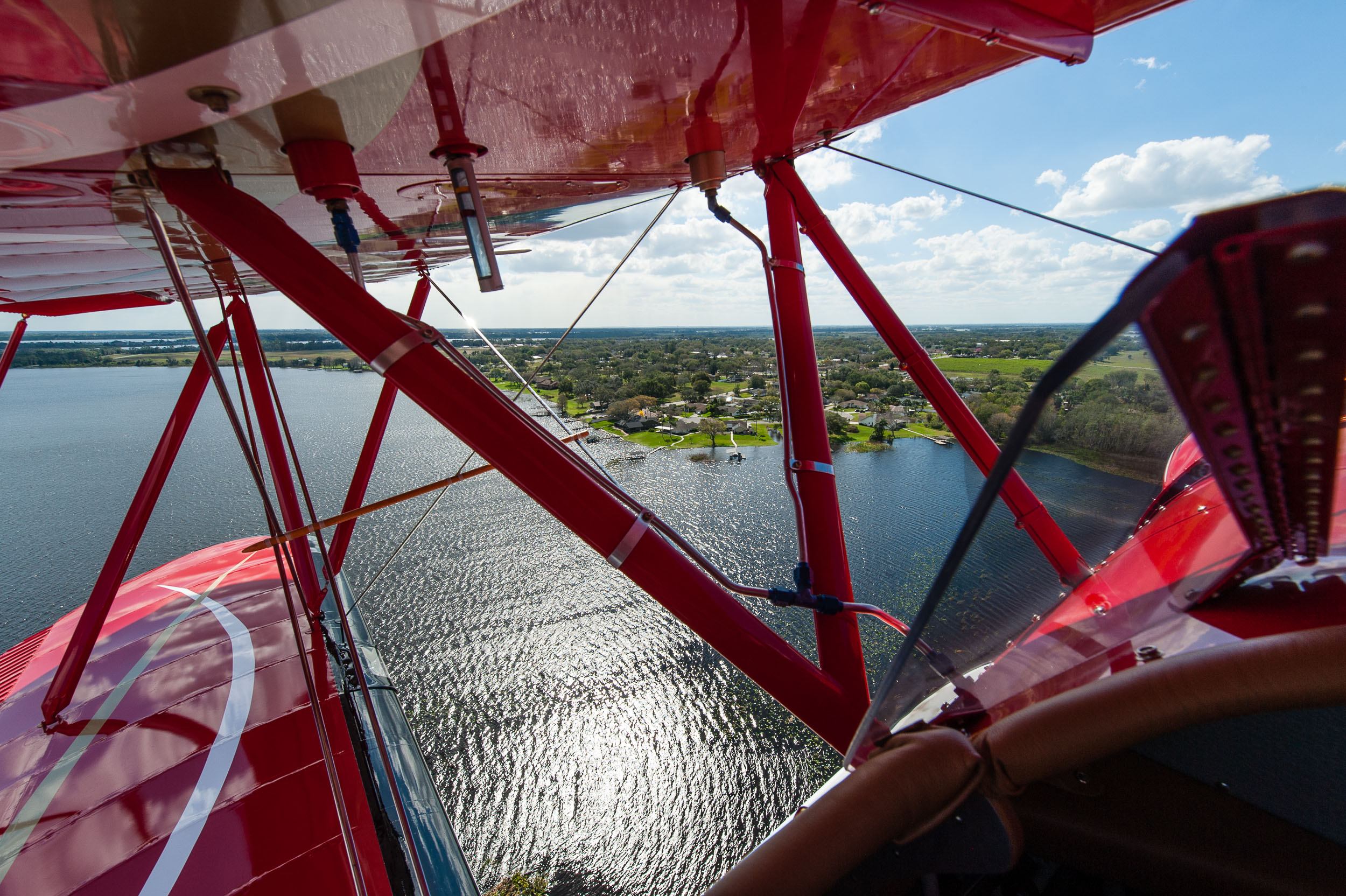
There’s no shortage of lakes in Florida. All we needed was one with a long enough run, not full of fishing boats and didn’t look too rough, wave height not being solely related to wind strength but also to a lake’s size and the depth of its water.
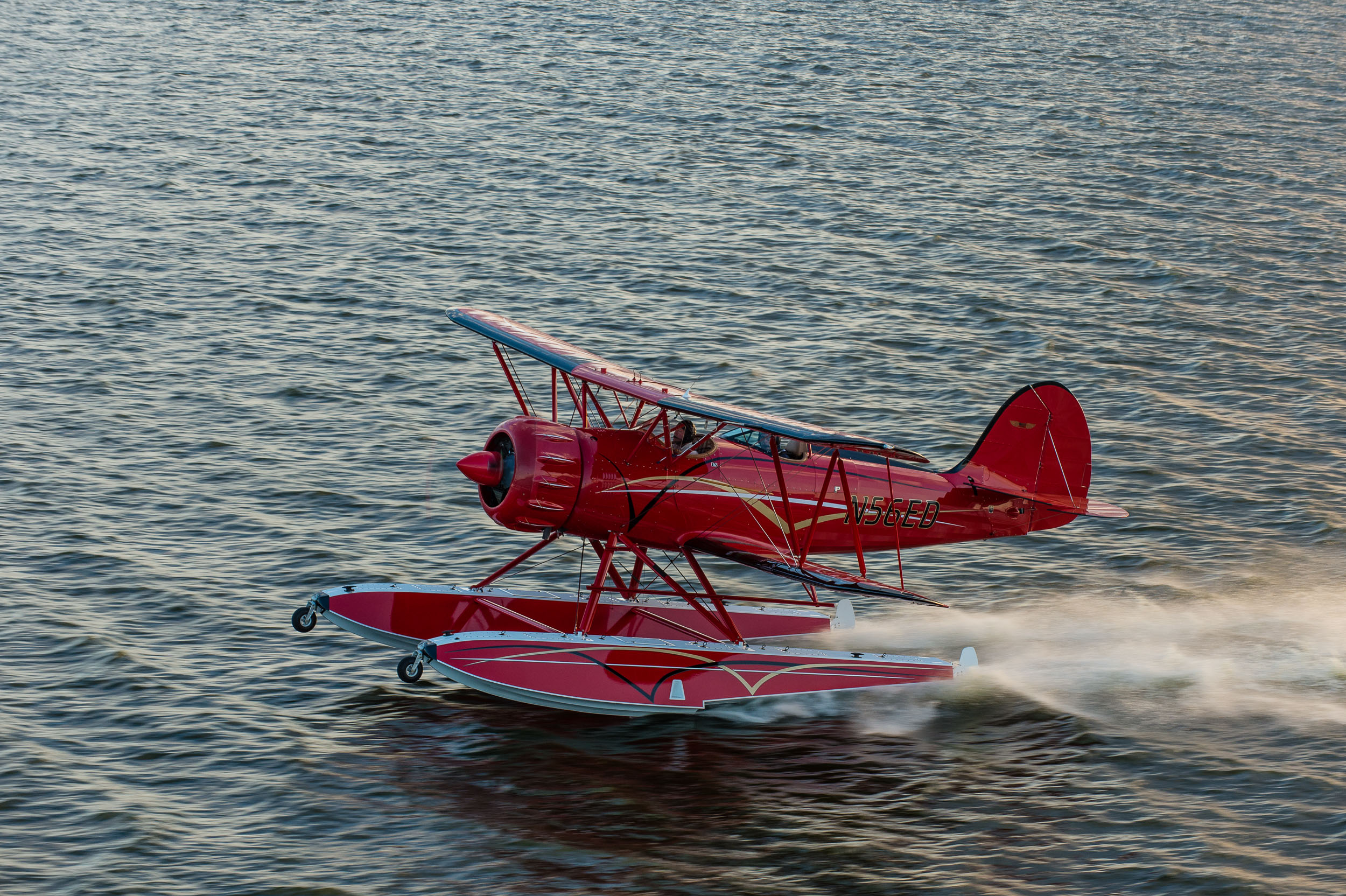
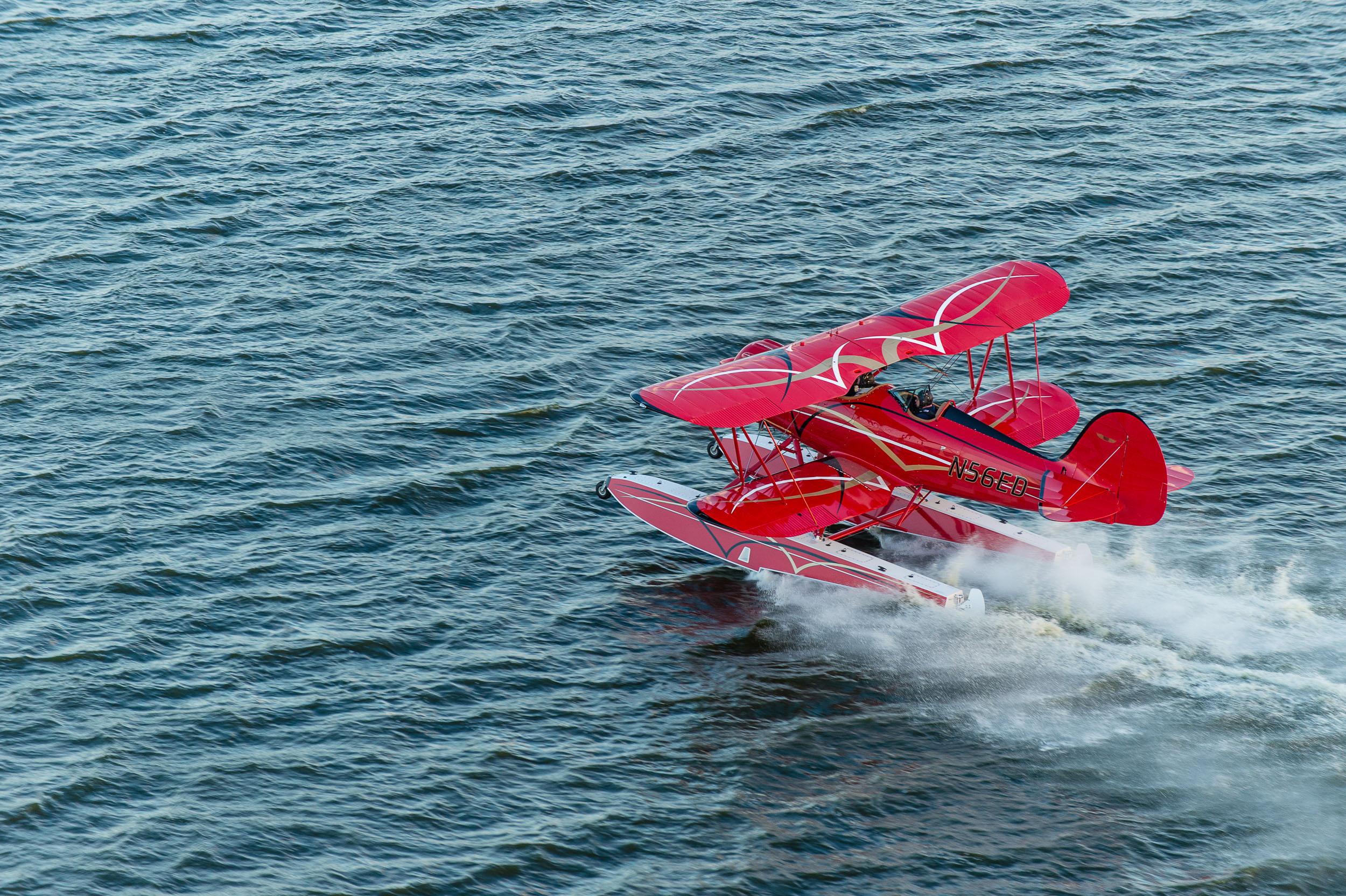
After Peter demoed a water landing I set up for my first-ever in a WACO. I checked that the water rudders and, more importantly, the gear were both up and came in trimmed for about 85mph. A nice digital lady buried inside the Aerocet GC600 audio warning panel started saying, “Water landing, gear is up for water landing”. She managed it five times before I worked out how to cancel her voice so I could concentrate on my arrival, which worked well, despite the bashing we took from the waves. Should the electric gear motor fail, it’s possibly to manually pump it up or down, but you can expect to be moving the lever about
165 times to fully retract or 230 times to totally extend it. Once down and at taxi, the rudders descend – they’re operated with the help of gravity, by releasing a cable – and steering on the water proved surprisingly easy, given the amount of aeroplane surface presented to the fresh wind.
The WACO is basically a ‘fifteen-second aircraft’ on water – that being from the point you open the throttle to when its floats lift into the air. A conservative rule of thumb says that if it takes twenty seconds to overfly the lake at cruise speed you’ll have plenty of room to get off that bit of water once you’ve landed. Taking off in a floatplane involves holding the stick back at the start of the run, to get onto the step. You then go forward on the stick, to reduce the water drag and keep it on the step, so it accelerates. The possibility for a bit of PIO exists, particularly when it’s a bit choppy, and I was glad of Peter’s subtle guidance on a couple of occasions. We flew on and off a bunch of lakes and heard lots of “Water landing, gear is up for water landing” confirmations before reluctantly heading back to Winter Haven.
Setting up for landing means that the gear needs to be down, which is rewarded by the voice saying “Runway landing, gear is down for runway landing”. The approach speed is about 85mph and, again thanks to the crosswind, the size of the YMF-5F and its floats were acting a bit like a sail and pushing us places we didn’t want to go. The sight picture for the flare seemed disconcertingly high above the runway, but the trailing link does a great job and before long we were back on the FBO’s ramp, to see a fresh set of faces staring up at us from the restaurant.
So why would you want one of these? Well, given the YMF-5F’s layout and capability, I’m sure there’ll be some sales to companies which run sightseeing trips in and around interesting bodies of water,. But I’m equally certain that quite a few examples will go to people who’ll buy one for the combination of pure, unadulterated flying fun and the attention you’ll get as you pull onto the parking ramp when you next fly somewhere for breakfast or lunch.
I mentioned that the F in YMF-5F stood for Floats. Having flown it, I now realise that there was a clerical error made at the factory, and it should’ve really been called the YMF-5FMTF, with standing for F*** Me, That’s Fun.
There really are only three things that need fixing. The first is the horrible feel of the buttons you need to push to cancel the aural gear advisories. The second is that WACO’s Peter Bowers forgot to sign the aeroplane over to me on long-term loan. And the third is that I don’t happen to have the $600,000 and change I’d need to buy one, so I’ve had to content myself with making the necessary alterations to the doors of my fantasy hangar so the 3.75m tall WACO will fit without hitting the roof, and I’ve moved a few things around to make the required space. I say again, FMT(was)F!
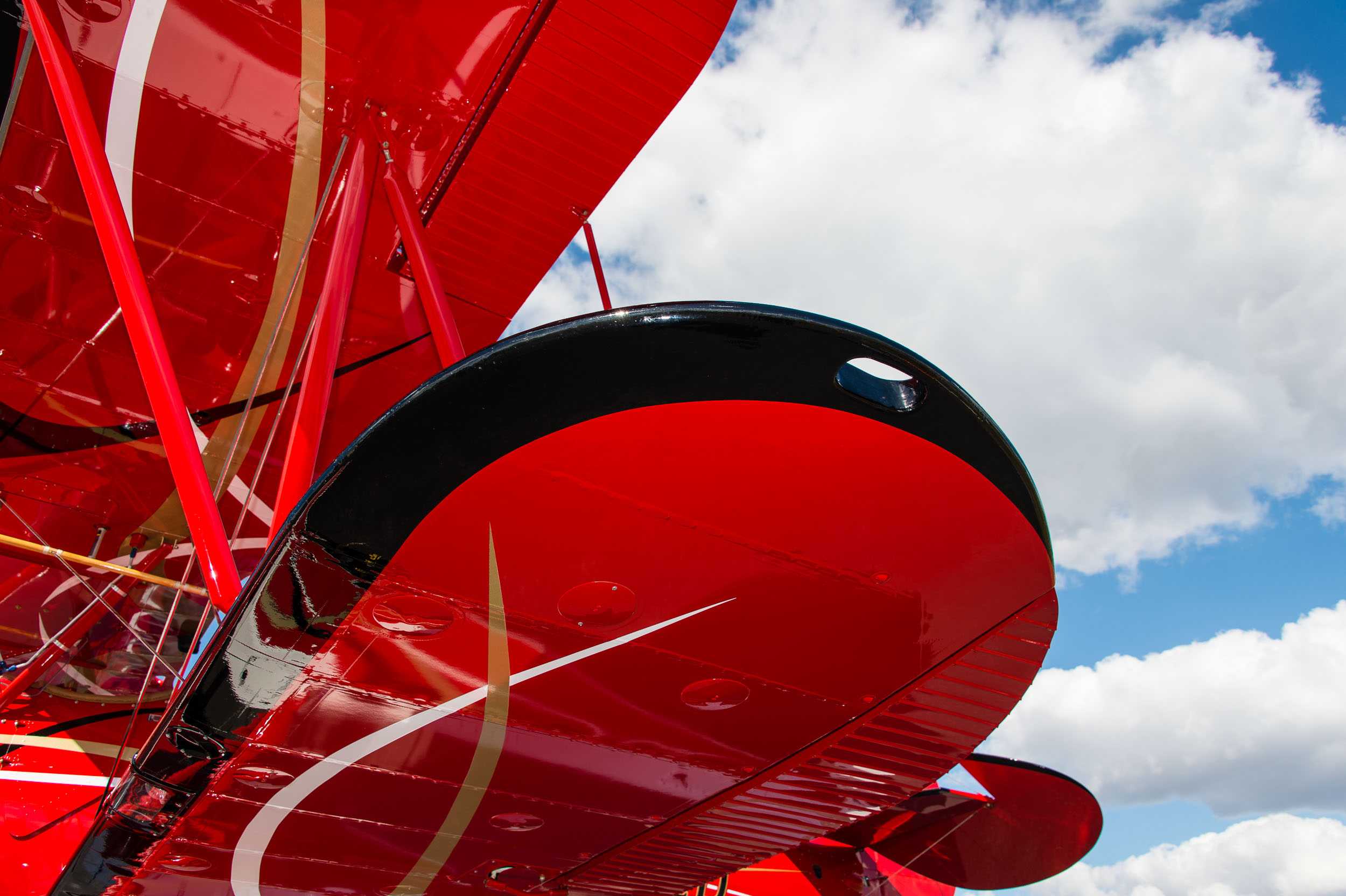
Want to turn your existing WACO into an amphibian? Sadly, you’re out of luck. In order to create the amphibious version, quite a few changes were required, and some of them can only really be done at the factory during manufacture. A number of fuselage mods are required (the WACO’s is tubular, with a wooden wing), some interior panels and trims need removing, and the baggage bay must be changed. You’ll also need to add foot steps in the fuselage, and a grab handle in the lower wingtip will make things easier when it comes to docking.
The standard 24v electrical system is replaced with 12v kit, principally for lightness, but there’s the added advantage of it being much easier to get a jump-start from a passing watercraft if you inadvertently left the master on while you were spending the day fishing from your float.
Given that weight is even more of a consideration with amphibs, the long-range tanks that are available as an option with a wheeled WACO are a no-no. Oh yes, I forgot, you also need a placard saying no aerobatics – they aren’t problem with a normal WACO but aren’t so good with the amphibs on!
The answer, of course, is to buy the amphibious version in the first place. That’ll give you the option of converting it back to wheels at a later date, although frankly there’s a fair bit of work and expense involved in that, not the least of which would be the need to revert to a smaller propeller (the wheeled version can take a maximum of a 95in prop). Maybe one of each would be more practical?
| Max speed (Vne) | 186kt |
|---|---|
| Cruise speed | 94kt |
| Stall speed | 51kt |
| Range | 240nm |
| Fuel burn | 14.5 USG per hour |
| Max take-off | 3,218lb (1,460kg) |
|---|---|
| Empty | 2,492lb (1,130kg) |
| Useful load | 726lb (329kg) |
| Baggage | 275lb (125kg) |
| Fuel capacity | 44usg (182 litres) |
| G-Limits | +5.2/-2.1 @ 2,950lb (Aerobatics prohibited) |
| Wingspan | (upper) 30ft (9.14m) (lower) 26ft 10in (8.18m) |
|---|---|
| Wing area | 233.5sqf (21.7sqm) |
| Length | 27ft 5in (8.36m) |
| Height | 12ft 3in (3.75m) |
| Airframe | Steel tube and fabric fuselage, wood wings |
|---|---|
| Engine | Jacobs R755A2 radial |
| Max power | 300hp |
| Propeller | Two-blade MT, 97in, composite, constant-speed |
| Avionics | Garmin |
| Undercarriage | Aerocet 3400 Amphibious Floats |
| $598,000 in 2018 |