When partial power loss is detected, fly your aircraft and focus on landing safely. Land before the situation decides for you…
Words: Mark ‘Greeners’ Greenfield
21 July 2026
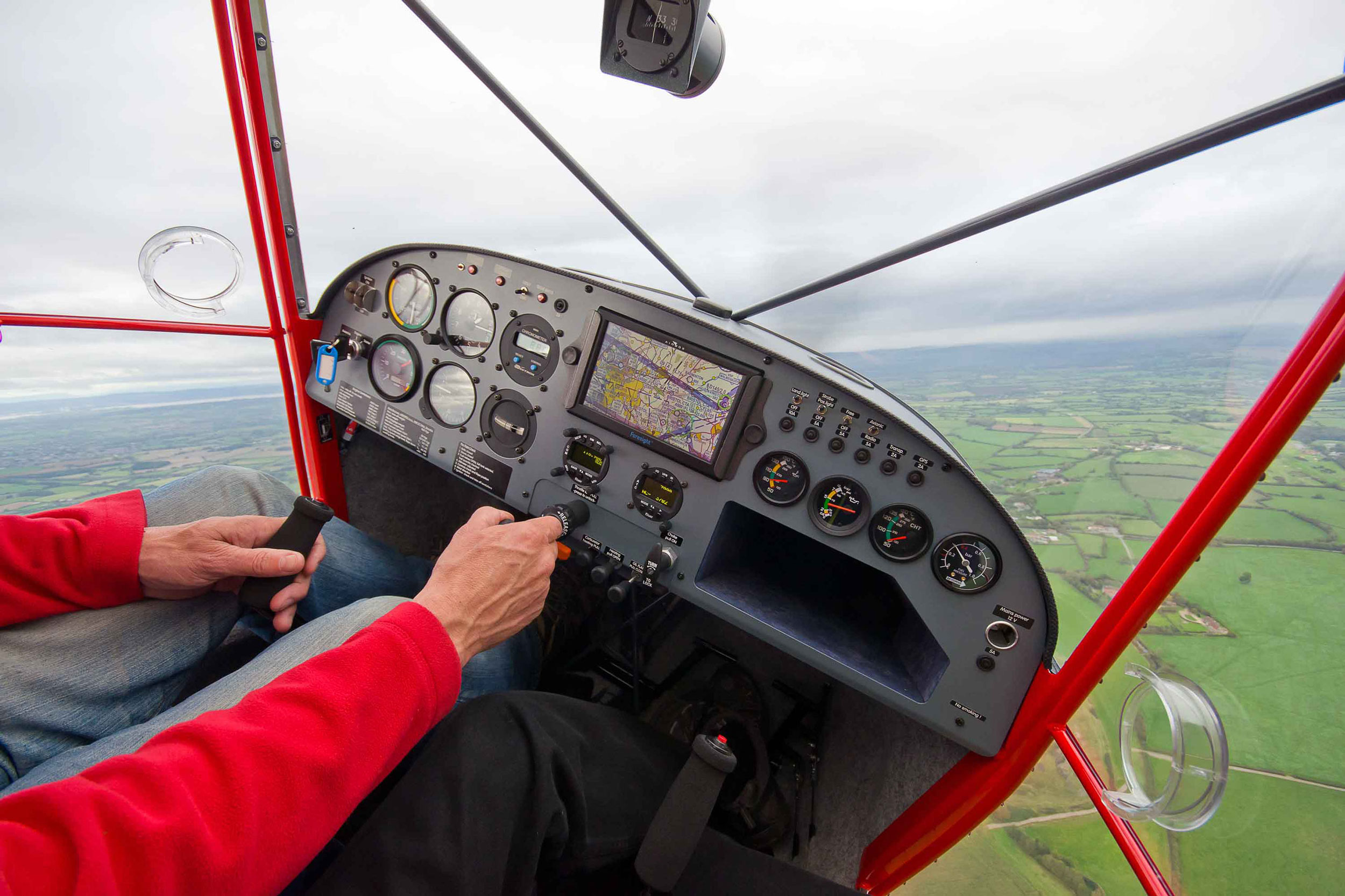
You’re climbing through 600ft after departure when something doesn’t feel right. The engine coughs. RPM drops slightly. The aircraft no longer seems quite as eager to climb. There is a subtle change in vibration, perhaps a slight change in noise. Nothing dramatic, but enough to trigger that quiet voice in the back of your mind that says something has changed.
Your eyes flick towards the engine instruments. Is it carburettor icing? Fuel? Ignition? A blocked injector? Temporary? Serious?
The challenge is that few pilots ever hear a voice saying, “Partial power loss detected.” Instead, they are presented with a collection of clues and must decide what those clues mean. Before they’ve answered any of those questions, however, the aeroplane has already started asking one of its own: “What are you going to do next?”
Most pilots spend time thinking about complete engine failures. We practise them during training, discuss them during check flights and occasionally rehearse them mentally before departure. The priorities are relatively clear. Lower the nose, establish the glide, choose somewhere to land and work the problem.
The engine is still running. The aircraft is still flying. The original destination may still appear achievable. The temptation is to continue while gathering more information and trying to work out exactly what has gone wrong. That temptation is precisely what makes partial power loss so dangerous.
The danger isn’t usually that the engine stops working. The danger is that the pilot keeps trying to fly the original flight.
If there is one message I would like every pilot to take away from this article, it is this: Fly the aircraft. Look for where you are going to land. Land before the situation decides for you.
Everything else is secondary. The moment partial power loss is suspected, your priorities should change. The objective is no longer completing the flight. The objective is arriving safely on the ground.
First, fly the aircraft. Protect airspeed. Protect angle of attack. Maintain control. Resist the temptation to focus entirely on the engine. Many fatal outcomes following power-loss events are not caused directly by the engine. They are caused by loss of control.
The aircraft no longer has the performance the pilot expects, but the pilot continues demanding the same climb, the same turn or the same outcome. Airspeed gradually reduces, angle of attack gradually increases and the margin to the stall quietly disappears.
Second, look. Start identifying suitable landing areas immediately. If the engine recovers, excellent. If it doesn’t, you’ve already solved the next problem.
One trap I occasionally see is pilots becoming fixated on finding the perfect field. They evaluate one option, then another, then another, while altitude quietly disappears. In the real world, particularly at low level, perfection is often the enemy of survival. A phrase I sometimes use during training is: “Don’t waste time looking for the five-star option. Take the LSO – the Least Shit Option.”
That may sound slightly flippant, but the principle is important. The objective is not finding the perfect field. The objective is selecting the best survivable landing area available while you still have the altitude, energy and manoeuvring margin to reach it. A good field selected early is usually a far better outcome than a perfect field selected too late.
Third, land. Not necessarily right now, but start moving mentally towards a safe outcome. Treat the engine as unreliable until proven otherwise and assume the situation may deteriorate further. The best time to land is before you absolutely have to. The objective is not to see how far the aircraft can continue flying. The objective is to land while you still have choices. The engine problem starts the chain of events. Losing control often comes later.
At first glance, the engine problem appears to be the emergency. In reality, emergencies often start seconds earlier.
The moment the engine coughs, the noise changes or the climb performance no longer matches your expectations, your brain is forced to answer an unexpected question: “What is happening?”
Most pilots think of startle as something dramatic. In reality, it is often surprisingly subtle. There is no freezing, no panic and no obvious loss of control. Instead, there is a brief period where the brain is trying to reconcile reality with the plan. The aircraft was climbing normally. Now it isn’t. The engine was healthy. Now it isn’t. The runway was behind you. Now perhaps it suddenly looks attractive again.
During those first few seconds, attention narrows. Workload increases. Decision-making slows. Pilots often become absorbed in diagnosing the problem, while unconsciously assuming that the aircraft will continue to behave as before.
Unfortunately, the aeroplane is already adapting to the new reality whether the pilot is ready or not. Airspeed may be reducing. Climb performance may be disappearing. Options may be shrinking. Partial power loss is fundamentally an adaptation problem. The engine has changed the situation. The question is whether the pilot adapts quickly enough.
This is why partial power loss can be so deceptive. The challenge is not simply managing the engine. The challenge is recognising quickly that the plan has stopped working and adapting before the situation deteriorates further.
The pilots who adapt early tend to retain options. The pilots who spend too long trying to understand what is happening often discover that by the time they fully understand the problem, many of their options have already disappeared.
One of the most powerful forces in aviation is continuation bias. We become committed to the original plan. We want to reach the destination, complete the flight or continue as intended. Because the engine is still producing some power, the temptation is to carry on just a little longer while we gather more information.
After all, perhaps the problem will clear itself. Perhaps it isn’t that serious. Perhaps we’re only a few minutes away. The difficulty is that options rarely disappear all at once. Altitude is gradually consumed. Suitable landing areas pass behind. Workload increases. Terrain gets closer. The situation becomes progressively less forgiving.
The pilot who decides early usually retains options. The pilot who waits for certainty often discovers that certainty arrives at exactly the same moment that options disappear. Many pilots spend too much time trying to save the engine and not enough time trying to save the outcome.
One area that deserves particular attention is angle-of-attack management during descending turns. Most pilots understand the stall in straight flight. Far fewer appreciate how quickly the situation can deteriorate when manoeuvring close to the ground following a power-loss event.
Imagine positioning towards a field, returning towards an airfield or stretching a glide towards a preferred landing area. The aircraft is descending, the ground is approaching and the desire to reduce the rate of descent becomes increasingly powerful. The temptation is to pull a little harder, tighten the turn a little more or try to squeeze a little more performance from the aeroplane.
Under stress, pilots naturally focus on the field, the runway, the ground or the engine problem. Unfortunately, the wing is still only interested in one thing: angle of attack.
The wing does not stall because of a particular airspeed. It stalls when the critical angle of attack is exceeded.
Under pressure, particularly at low altitude, pilots can inadvertently increase angle of attack while simultaneously increasing bank angle and workload. The result can be a stall-spin accident from which recovery is impossible. The aeroplane can survive losing power – it cannot survive exceeding the critical angle of attack close to the ground.
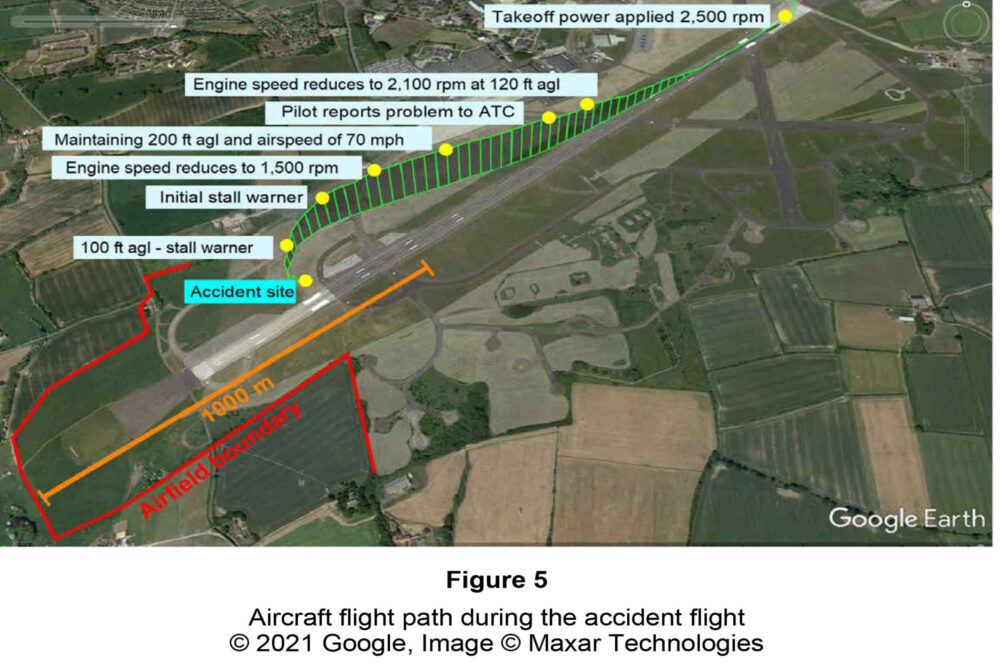
No discussion of partial power loss after take-off is complete without mentioning the turnback. For many pilots, the runway behind exerts an almost magnetic attraction. The engine is still running. The aircraft is still airborne. The runway is still visible. Returning to the airfield can seem like the safest option.
The problem is that partial power loss often creates a dangerous illusion. The aircraft may still be climbing, but only just. It may still be flying normally, but with very little performance margin remaining. It may still be controllable, but only if angle of attack is carefully managed.
Following a number of fatal accidents, the CAA and AAIB conducted a detailed review of partial power loss events shortly after take-off. The study examined 16 field investigations over a 10-year period.
Where pilots accepted the situation early and carried out a forced landing ahead, there were no fatal accidents. However, of the five accidents in which pilots attempted to turn back towards the airfield, not one avoided death or serious injury.
Perhaps even more interesting was why?
Investigators found pilots were often reluctant to accept that the original plan had failed. Because the engine was still producing some power, there was a powerful temptation to nurse the aircraft back to the runway or continue in the hope that the problem would improve. Unfortunately, hope is not a performance-enhancing device.
While the pilot is trying to save the flight, the aircraft is quietly running out of options. The turn tightens. Airspeed reduces. Workload increases. Attention becomes focused on the runway behind rather than the wing above.
The pilot is trying to solve an engine problem. The aircraft is approaching an aerodynamic problem. This is where startle becomes particularly dangerous.
When something unexpected happens, the brain naturally wants to understand it before acting. For a few crucial seconds, attention narrows and decision-making slows. Pilots can become absorbed in diagnosing the fault while unconsciously assuming the aircraft will continue to perform as before.
The aeroplane, meanwhile, is operating according to a completely different set of rules. It does not know that you want to get back to the runway. It only knows the angle of attack being demanded of the wing.
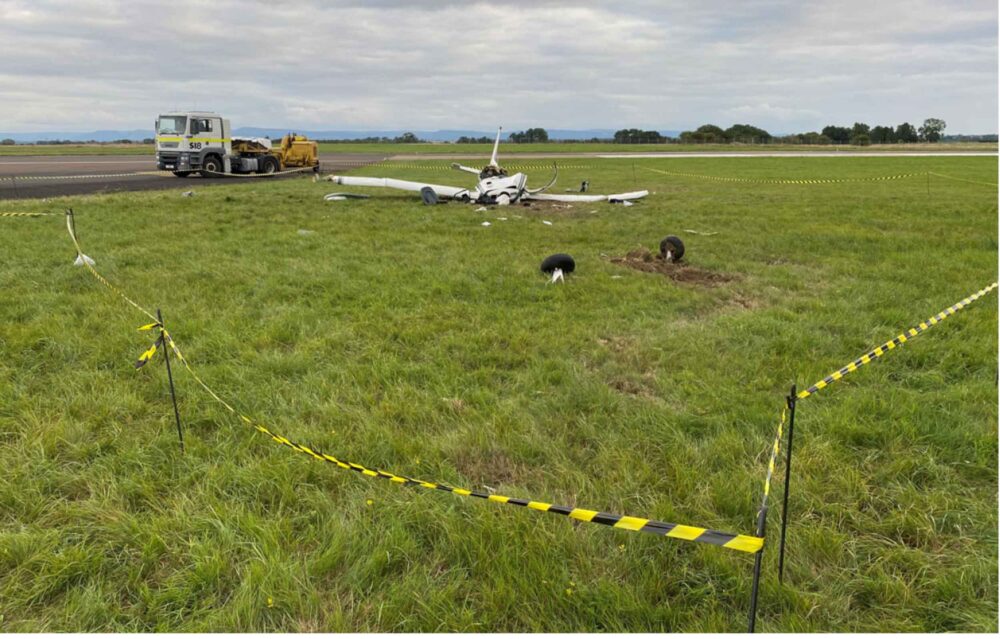
As the CAA study highlighted, the real danger was often not the engine problem itself but the loss of control that followed. Pilots manoeuvred at low speed and low altitude while attempting to preserve height or complete the turn back to the runway. The result was frequently an aerodynamic stall from which recovery was impossible.
The lesson is not that a turnback is never possible. A pre-briefed, practised turnback from sufficient height is a very different proposition from an improvised turnback at low level following an unexpected partial power loss. The lesson is that partial power loss dramatically changes the risk calculation.
Many pilots have considered what they would do following a complete engine failure after take-off. Far fewer have thought carefully about what they would do if the aircraft retained only some of its power. Yet partial power loss may be the more difficult scenario because it tempts us to continue with the original plan.
Following the study and subsequent AAIB recommendations, the CAA introduced partial power loss training into PPL, NPPL and Sailplane/TMG syllabi.
The emphasis was clear: maintain control, manage the problem methodically and commit early to a landing ahead, or within a limited arc, rather than attempting a low-level turnback.
In many cases, the safest decision is not the one that saves the aeroplane. It is the one that saves the occupants. A controlled landing under control of the aircraft is usually survivable. A stall-spin close to the ground rarely is.

Of course, troubleshooting has a role. If time and altitude allow, checks involving fuel selectors, fuel pumps, carburettor heat, mixture controls and ignition systems may identify a recoverable fault. Many partial power losses have causes that can be rectified.
The key point is sequencing. A rough-running engine at 500ft is a flying problem first, and a troubleshooting problem second.
The objective is not restoring full power. The objective is arriving safely on the ground. Fly the aircraft. Look for somewhere to land. Manage the angle of attack. Then use whatever time, altitude and spare mental capacity remain to diagnose the fault. If the engine recovers, excellent. If it doesn’t, you are already moving towards a safe outcome.
The more accident reports I read, the less convinced I become that most accidents are fundamentally technical failures. Technical failures certainly occur. Engines fail, components break and systems malfunction. What determines the outcome is usually what happens next.
Partial power loss is a perfect example. The engine problem is simply the trigger. The real challenge begins when the plan stops working.
Can you recognise that quickly? Can you accept that the situation has changed? Can you adapt before your options disappear? Can you protect your margins and preserve your choices? Can you make a decision before the situation makes one for you?
Those questions usually determine the outcome far more than understanding exactly why the engine is running rough. Engines fail. Systems malfunction. Plans stop working. What determines the outcome is rarely the failure itself. It is how quickly the pilot recognises that reality has changed and adapts to it.
Partial power loss is not usually a test of engineering knowledge. More often, it is an adaptation test. The pilots who adapt early tend to keep their options. The pilots who don’t often discover that the options have already been taken away.