There’s a change coming up in the training syllabus for a Private Pilot Licence (PPL): Partial Power Loss is be taught as part of the flying exercises.
From 1 October 2025, partial power flight exercises will be added to training for:
- Private Pilot’s Licence (Aeroplanes) – PPL(A)
- National Private Pilot’s Licence (Aeroplanes) – NPPL(A)
- Sailplane Pilot Licence with Touring Motor Glider rating
Partial engine power loss scenarios will also be a recommended exercise on the biennial refresher training for single engine piston (SEP), touring motor glider (TMG) and microlight class rating holders.
The change comes three years after the Air Accident Investigation Branch (AAIB) urged the UK CAA to rethink how engine failure and emergency procedures are taught.
The AAIB was commenting after two separate crashes in the summer of 2022 in which two people died and three others seriously injured.
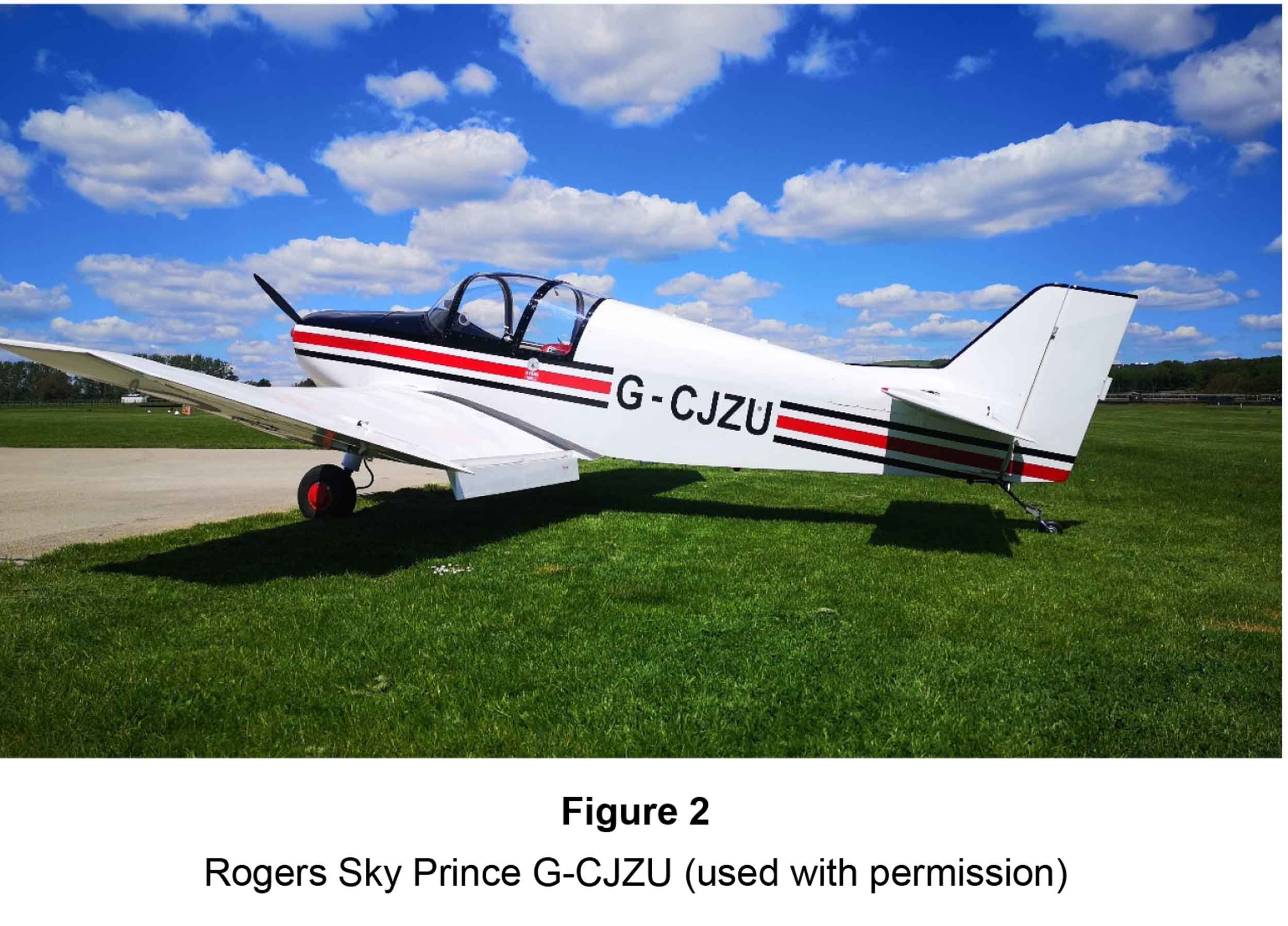
In the first crash, a Rogers Sky Prince (home-built Jodel D150 Mascaret) was being flown by a Class Rating Instructor (CRI) with more than 700 hours experience. The aircraft took off from Goodwood Aerodrome when it suffered a partial engine failure. Witnesses saw the aircraft struggling to climb. At around 300ft the aircraft stalled and crashed about 500 metres outside the airfield boundary, killing both occupants.
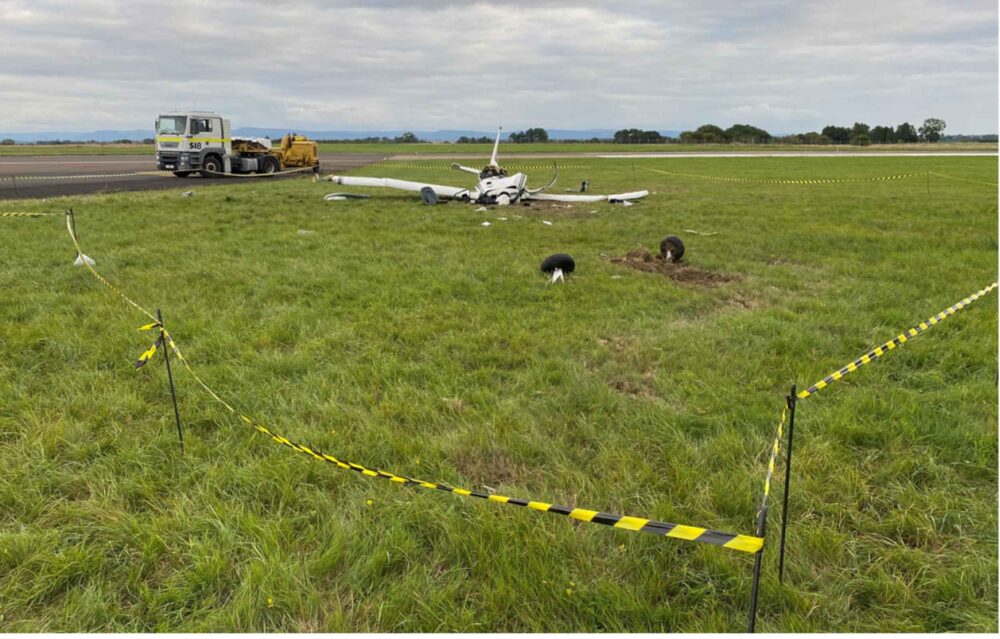
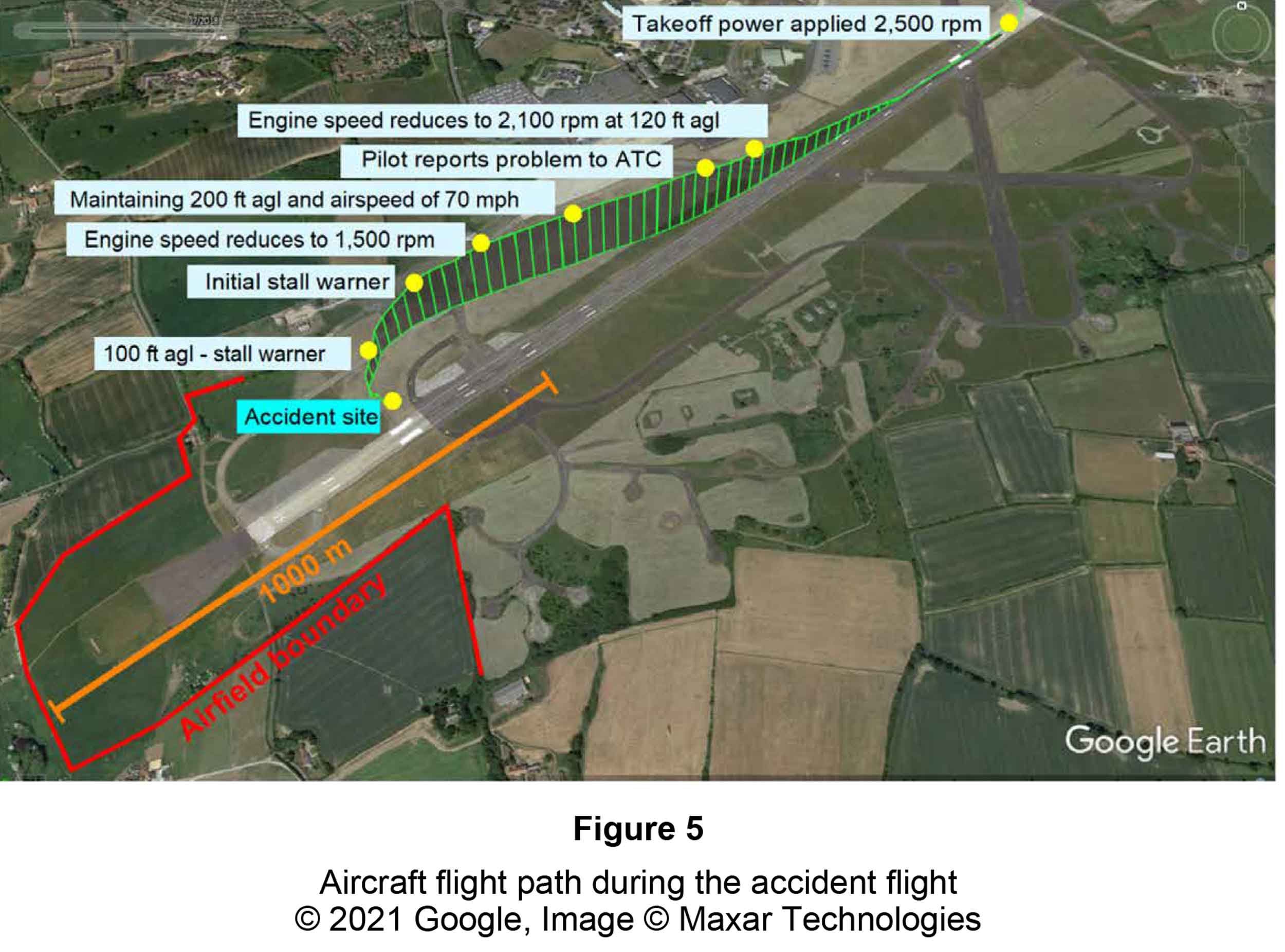
Less than three months later, a Grumman AA-5 was taking off at Teesside International Airport when it too had partial engine failure at around 120ft over the runway. The pilot, with 1600 hours experience, elected to turn back to land in the reciprocal runway direction but “at approximately 60ft agl, the left bank angle suddenly increased, and the aircraft descended rapidly, striking the ground 67 seconds after becoming airborne.” All three occupants were seriously injured.
Grumman crash site
The AAIB issued Safety Recommendation 2022-005 calling for the UK Civil Aviation Authority to require ab initio pilots to undergo training in the management of partial power loss situations in single-engine fixed-wing aeroplanes.
Sixteen accidents investigated
In the ten years 2011 to 2021 the AAIB investigated 16 accidents involving partial loss of engine power. 15 fatalities resulted from those 16 accidents as well as nine serious or life-threatening injuries.
Two of the accidents resulted in no injuries, both as a result of flying the aircraft under control to a successful forced landing or ditching. The AAIB also note that in the 10-year period there were five attempted ‘turnbacks’, all of which resulted in fatalities or injuries.
The Skyway Code, published by the CAA, addresses the issue of engine failure and offers this advice:
- Know your best glide speed and procedures for your aircraft.
- Particularly at low level, focus on maintaining speed and control. Provided you keep the aircraft at flying speed and under control, engine failures are unlikely to be fatal.
- If a failure happens shortly after take-off, landing ahead is safer than attempting to turn back. Assess the area immediately in front of you and pick the place that is likely to cause the least damage.
- Partial engine failures can confuse the decision-making process. Assess whether the failure is likely to become worse – for example if rapidly losing oil pressure, the engine may not run for much longer. Take a positive decision to either put down in a field or continue to an aerodrome, depending on your judgement of the problem.
One other piece of advice comes from the Australian Transport Safety Bureau. The ATSB suggests pilots ‘self-brief’ before every take-off. Common in multi-engine and commercial flying, it’s also applicable for single-engine PPL operations.
A self-brief might comprise of a review of the take-off situation (runway length, weather, obstructions and possible landing areas) and probable actions in the event of an emergency.
Webinar for flying instructors
To provide guidance to instructors on this subject, Astral Aviation Consulting is hosting a 90-minute webinar on 10 September 2025, at 19:30 BST.
All Flight Instructors and Class Rating Instructors qualified on the relevant aircraft are encouraged to attend.
Click here to sign up