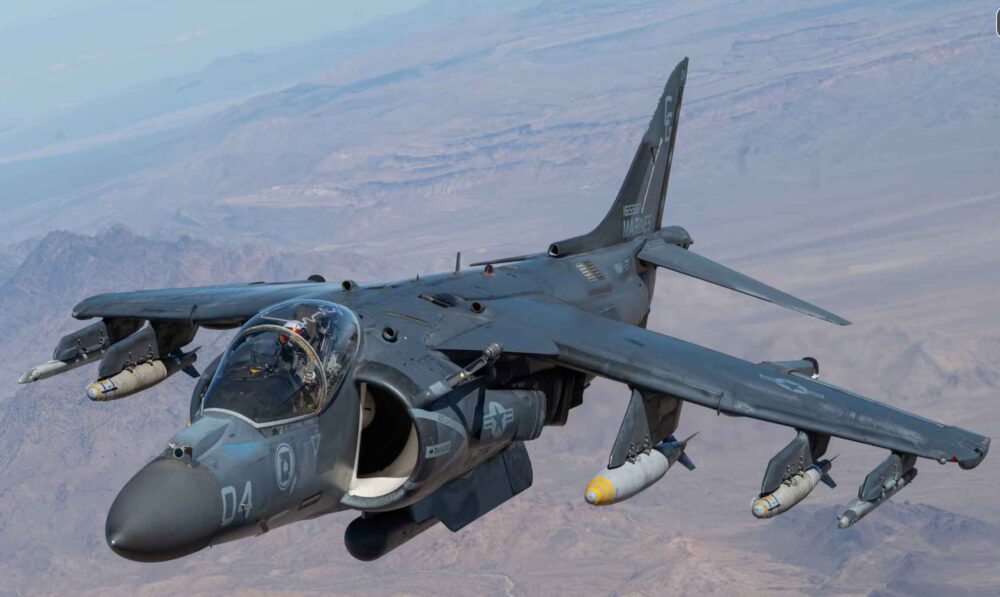
The United States Marine Corps has officially retired its last operational AV-8B Harrier II squadron, bringing to a close nearly 40 years of frontline service for one of the UK’s most distinctive combat aircraft.
Marine Attack Squadron 223 (VMA-223), based at Marine Corps Air Station Cherry Point, North Carolina, marked the end of Harrier operations with a four-day “Harrier Sundown” celebration last week.
The Marine Corps is transitioning to an all fifth-generation tactical aircraft fleet centred on the Lockheed Martin F-35B Lightning II.
The Harrier’s retirement marks the end of an era not only for the Marine Corps but for military aviation worldwide. Developed from the pioneering Hawker Siddeley Harrier, the aircraft’s ability to take off and land vertically or on very short runways revolutionised battlefield air support operations.
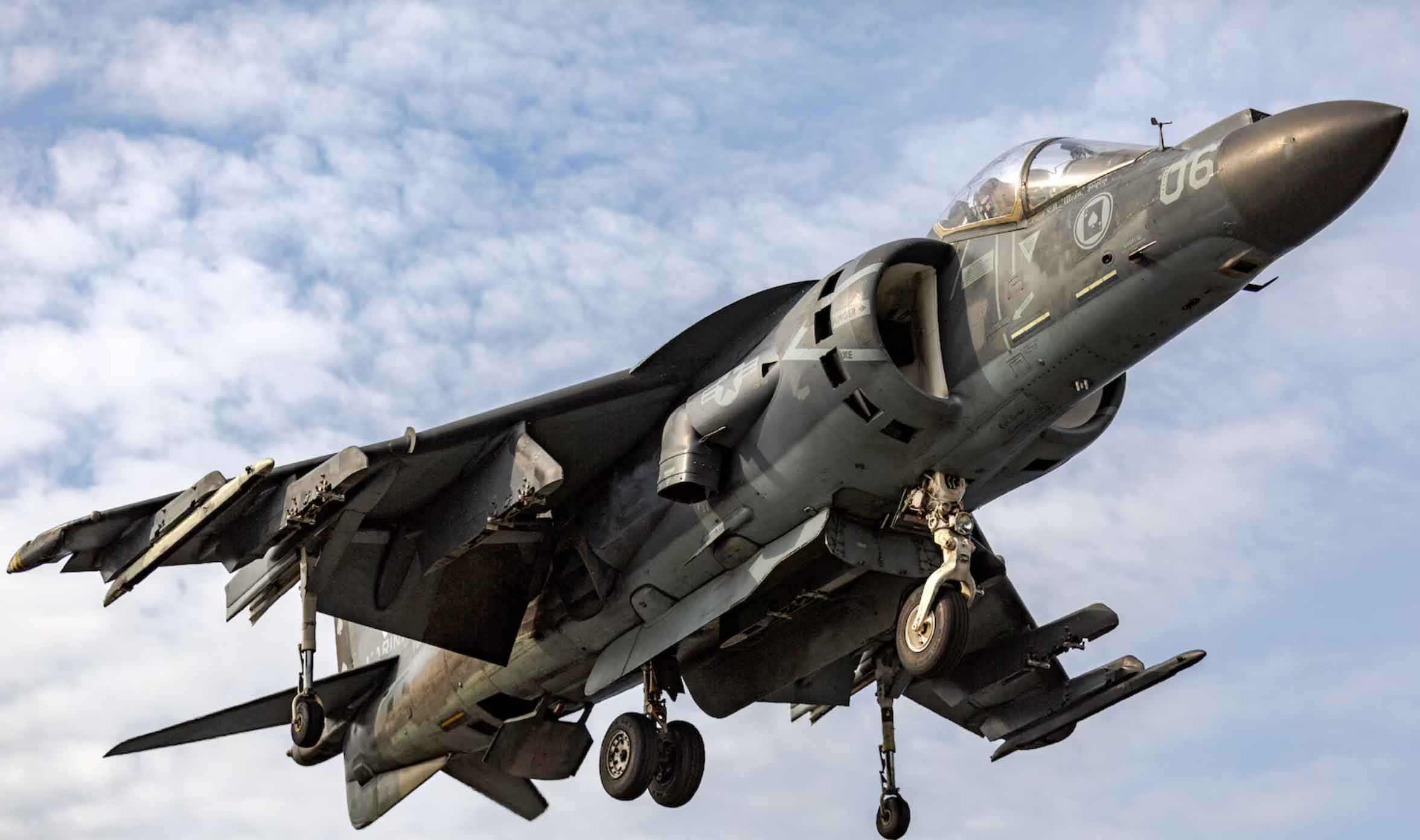
The AV-8B variant entered US Marine Corps service in the mid-1980s and became a familiar sight in conflicts ranging from Operation Desert Storm to Afghanistan and Iraq. Its ability to operate from remote forward bases and amphibious assault ships provided a flexibility unmatched by conventional fast jets.
- Harrier pilot Paul Tremelling on the FLYER livestream
The Harrier’s retirement also closes a chapter in British aviation history. The aircraft traces its lineage directly to the Hawker Siddeley P.1127 and Kestrel programmes developed in the UK during the 1960s, leading to the first operational Harrier and later the Anglo-American AV-8B programme.